Showing posts with label Lydia Brown. Show all posts

Friday, March 31, 2017

Against the Erasure of LaVonnya Gardner

Image of LaVonnya Gardner's AAC board with the written
 and PEC symbol sentence "I use AAC everyday and I Love it"
written on the display panel above the PEC images and wordsin orange, pink, red, green, and light blue squares. Credit
LaVonnya Gardner, Twitter. 
 Black, deafblind autistic activist LaVonnya Gardner died suddenly in late August of last year. She was someone I was proud to call a friend.

Her death was particularly heartbreaking to me and mine. To understand what LaVonnya simply existing meant to me and my son Mustafa, you have to realize a few important details. LaVonnya understood what being blind meant, so we had that common ground because I was once blind for a time and it was assumed I would wear a prosthetic left eye and be blind permanently. LaVonnya understood what it meant to a Black disabled parent to an autistic child in the DMV (the District, Maryland, and Virginia) because she was the mother of an autistic daughter. LaVonnya understood what it meant to be a nonspeaking autistic who used AAC to communicate because she was a nonspeaking autistic adult who used AAC to communicate. LaVonnya knew what it meant to navigate the world as a Black nonspeaking autistic adult, and she had good, practical advice for my autistic nonspeaking son about survival as a Black autistic male in a hostile world.

She built a library of YouTube videos and AAC related social media posts, knowing her own import to nonspeaking autistic Black youth. She, activist Lydia Brown, and others were the founders of The Washington Disabled Students Collective. My hope was that her body of work would live on should she pass away and that she might also leave the legacy of her intellectual property for her daughter and others it might help.

We had an agreement to meet in the Smithsonian gardens with our kids in the Spring. You really don't understand the impact someone has on your life until they are suddenly gone.


LaVonnya Gardner.  image of a Black woman with long braided hair
wearing a pink blouse credit LaVonnya Gardner
I realized in February that the Amplify Autistic Voices project, which I had decided to end, had LaVonnya speaking about herself in her own words. I stopped my plans to delete the blog. I could not erase her. After her death, a relative she did not get on with insisted a name she left behind to move away from an abusive past was her name. That person disregarded her final wishes and tried to collect money from LaVonnya's grieving friends and colleagues. Dozens of her instructional and advocacy videos are erased from her YouTube channel, and only two videos on her Beautiful Unicorn channel remain.

LaVonnya helped many parents and autistic children, both independently and in support groups. She had a patience with parents that I sometimes do not have. She was an activist who stepped up as much as her health allowed. She was excited and looked forward to working with my son and spending quality time with him because they were so similar. I cannot begin to express what the loss of her AAC instruction videos means for those who can't call or message her anymore.

If you have any photos, videos, digital content of LaVonnya's please post it on her memorial Facebook page. I don't know anyone else like her, and I doubt I ever will.

LaVonnya Gardner was my son's role model. She was the living proof that nonspeaking deafblind persons could live, love, produce and parent disabled children, live autonomously, and speak up for themselves.

She was a beautiful Unicorn who should not be erased or forgotten. Help me make certain she's remembered.

Wednesday, May 18, 2016

How Not To Endorse An Anthology

Tom Wiggins aka Thomas Greene Bethune, holding a copy of his composition
Rain Storm Photo By W. L. Germon of Philadelphia - tennis*elbow,
 Public Domain, https://commons.wikimedia.org/w/index.php?curid=25192531
A historic event in the timeline of the history of autism and disability rights activism is about to happen. The Autism Women's Network, probably the most diverse nonprofit organization in autism rights advocacy, is about to publish an anthology consisting entirely of nonwhite voices. "All The Weight Of Our Dreams" was edited by three powerful activists of color, Lydia X. Z. Brown, E. Ashkenazy, and Morénike Giwa Onaiwu. This may be the only anthology actually allowing the voices of autistic people of color to speak without validation or qualification of parents or professionals. This will be groundbreaking. 

I was therefore shattered when I read a piece by NeuroTribes author Steve Silberman giving the book a brief mention in a recent article entitled "The Invisibility of Black Autism." Why would a white best-selling author of a history of autism and neurodiversity's acknowledgment of an anthology on race and autism upset me? I wrote about the erasure of Black autistics from histories of autism, including Mr. Silberman's in the article "Autistic While Black: The Erasure of Blacks From Histories of Autism."

Since the message has not been understood, here's what is wrong with Mr. Silberman's article, and it is a primer about how not to write about race and autism.

1. Don't be a hypocrite.  If a white author excludes any mention of Black autistic historical figures in a comprehensive history of autism, he has no place writing about the topic as if he is an authority on it. Mr. Silberman excludes Black autistics from his history of autism, where Blacks, in general, are only mentioned to give scenery and import to the heroes of his book. He also applies the n-word in his book unnecessarily, as the use of the expletive adds no value to the narrative at all. Imagine my surprise when suddenly he's writing about the trials and tribulations of Black autistics.

2. Don't conflate the issue by choosing a misleading topic title. "The Invisibility of Black Autism" is a nod to a CNN article by African American Autistic music producer Mike Buckholtz you can read about here. The title conflates invisibility and what is actually happening which is erasure. Articles like "The Invisibility of Black Autism" actually contribute to erasure.  Black autistics are visible; the issue is how they are impacted by disparities in health care support, misdiagnoses based on presumptions founded in structural racism, disparities in educational and ADA supports and services, and research that excludes and abuses them (I disagree with Mr. Silberman that the exclusion of single parents is a factor, this is an example of how a generally known statistic about a socio-economic group within a racial minority is both overgeneralized and used to presume causation of factors that may correlate but not be relevant to the issues discussed). Invisibility implies Black autistics are not visible; erasure makes it clear that Black autistic representation, Black autistic voices, and Black autistic people are having their efforts appropriated, used for the benefit of others, and as a result wiped away.

3. Don't write if you don't know your topic. When an uninformed white author tries to write about race and disparities in research, inevitably the history of the use of the Black body as a human lab rat is excluded from the narrative, and cultural stereotypes like the single Black parent phenomenon and cultural limitations within our community are pursued as a cause for lack of accurate data. Black families are leery of studies with just cause, and when trust is given to researchers the consequences continue to be devastating, as recent events like the disastrous Kennedy Krieger lead paint study lawsuits continuing in Baltimore have made clear. Never discussed are infrastructure planning decisions resulting in toxic environments for disproportionately Black and Brown communities, and how such environments impact disability and Black and Brown attitudes about research as well. See the latest civil rights lawsuit filed against the state of Maryland about the building of an additional power plant in Brandywine, MD bringing the total of plants in one community that is 75 percent Black to 5. The impact of environmental injustice on disability and race would not be addressed by an author who would fail to realize its disproportionate impact on our community.

4. Don't plug an Autism Speaks supporting site in the same article you plug the anthology of three powerful autistic fem activists of color fighting for disability rights of intersected people.  The Color of Autism site promotes Autism Speaks' 100-day kit and the medical model philosophy of autism. While their documentary attempt to give voice to the need for services is admirable, it uses the autistic youth in the film in the same manner they are used in any Autism Speaks PSA and this is infantilizing, appropriative of their voices, and diminishes them. Mr. Silberman appears to be attempting to placate potential audiences for his book,  and straddling a fence to gain the good graces of parents rather than supporting a great anthology by disability rights activists who are experts on the topic. Numerous sites on disability and race exist, along with blogs from disabled disability rights activists of color, parent allies, and academics who write on the topic of disability rights and critical race studies. I can therefore only conclude that the choice to mention The Color of Autism was clearly meant to promote Autism Speaks supporting parents of color.

5. Don't begin an article with a slave trope presentation of an important Black autistic historical figure and force readers to read a degrading portrait of him in a racist oppressor's account of a man who spoke through his musical compositions, regardless of who that racist white person was. Mr. Silberman continues to use Black people as objects in their own stories by placing the emphasis on famous white people and their dissection and denigrating view of said Black disabled people. The presentation of Black autistics in this fashion relegates historically important people like Tom Wiggins to chattel and this serves no purpose but to limit the reader's view of African American disability history as beginning and ending with slavery. Wiggins, who earned enough money while enslaved to hire a composer to teach him to compose blind, then fought until he was granted the right to have his own name on his compositions managed a monumental accomplishment for a man who was declared 'non-compos mentis' simply to keep him enslaved. He created variations in his compositions that do not fit the stereotype of the blind autistic savant pianist as understood today, so his groundbreaking work and his successful fight to put his name on his intellectual property were the ultimate triumphs despite his unlawful near lifetime enslavement.  Listen to this piece, The Rainstorm. Blind Tom traveled extensively and his musical expressions and influences were the sum total of his world travels, not just his life as a slave child on a plantation, a life he left at age 5 to begin a life as a traveling performer.
The Rainstorm by Tom Wiggins:


6. Don't erase Black autistic people from their own stories. The shock of not seeing a photo of the historical figure mentioned in the article, but instead, in a long article about the invisibility of Black autistics, the only image in the body of the article is that of white Leo Kanner, who would never have included Blind Tom in his classification and studies of autism in the first place, speaks volumes about erasure that while I'm certain Mr. Silberman did not intend happened again and with impunity in his article.

7. Don't talk about autistics of color without them. This piece of writing should not have happened. Instead, Mr. Silberman might have used his privilege to interview Lydia X. Z. Brown, E. Ashkenazy, and Morénike Giwa Onaiwu about the history of autism and race in general, the reasons they embarked on this project, and their individual and organizational goals with regards to the promotion of the voices of nonwhite autistic people. This means proper representation beyond simply requesting a quote, or using references from sources without noting their origin, thus erasing the voices of marginalized people speaking for themselves. Instead, we are subjected to a graphic of bursting black puzzle pieces, so the subliminal message is hammered home that Autism Speaks speaks for all Black autistics when they most certainly do NOT.

The article Mr. Silberman wrote is symptomatic of the structural racism embedded in our society, perpetuates stereotypes on race and autism, and erases autistic voices of color while its apparent intent was to bring these issues to light. How can this article be believed to aide endorsing any book on race and autism?  The road to hell is again paved with good intentions.


The Weight of Our Dreams is a powerful anthology and everyone who worked on it deserves a better endorsement. I hope they get one.

Resources:

The Weight of Our Dreams information can be found here:
http://autismandrace.com/
The Autism Women's Network information can be found here:
http://autismwomensnetwork.org/?gclid=CKP6guSC5MwCFQ9ZhgodrSMMiw
Autistic While Black: The Erasure of Black from Histories of Autism is here:
http://intersecteddisability.blogspot.com/2016/01/autistic-while-black-erasure-of-blacks.html
Steve Silberman's article title was derived from Mike Buckholtz's CNN article interview "The Invisibles" which can be found here:
http://ireport.cnn.com/docs/DOC-768049
Steve Silberman's Mark Twain references on Wiggins came from a medical model narrative probably here:
https://www.wisconsinmedicalsociety.org/professional/savant-syndrome/profiles-and-videos/profiles/blind-tom-a-19th-century-marvelous-musician/
Steve Silberman paraphrases a reference I made to a scene from the documentary "Refrigerator Mothers" taken directly from my article where Dorothy Groomer discusses racial reasons why University of Illinois doctors refused to label her son Steven as autistic that excerpt can be directly accessed here:
https://youtu.be/DtKJ0PCz4QI
A JHU Kennedy Krieger Institute Lead Paint Research study which harmed disporportionately poor black community members in Baltimore, disabling children, is the subject of ongoing multiple lawsuits which can be read about here:
http://articles.baltimoresun.com/2014-06-07/health/bs-hs-lead-lawsuit-new-20140607_1_kennedy-krieger-institute-children-study
A Civil Rights complaint has just been filed against the state of Maryland for approving a new fossil fuel power plant in Brandywine, a community that is 75 percent Black, brings the total plants producing toxic output to the community to 5 and can be read about here. 
http://www.publicnewsservice.org/2016-05-12/energy-policy/civil-lawsuit-filed-against-maryland-over-power-plant-in-brandywine/a51868-1
John Davis Plays Tom Wiggins here:
https://youtu.be/A2Y-l0bsriE

Tuesday, September 22, 2015

Flowers v Gopal: Ugly Laws, Amistad, Blind Tom Wiggins, & The Legal View of Autistic People

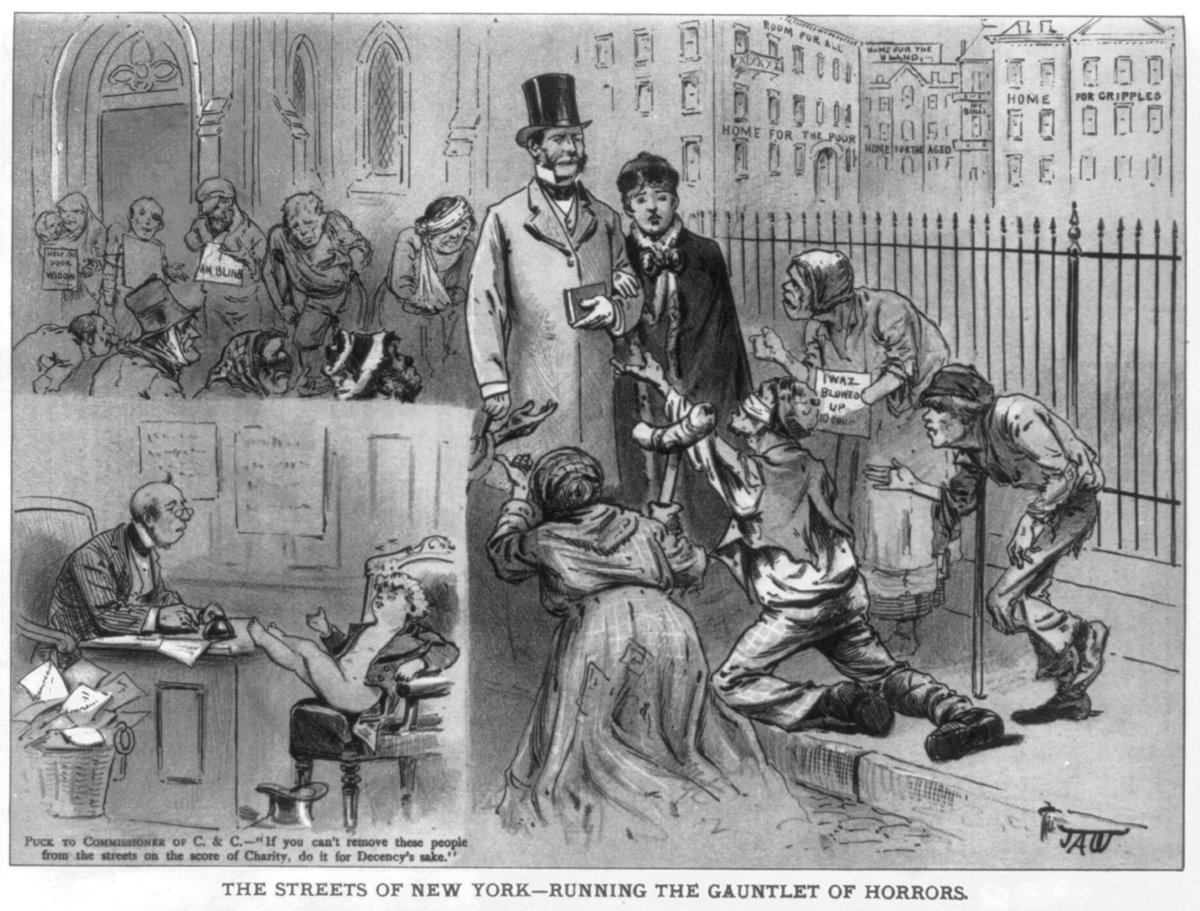
"From the late 1860s until the 1970s, several American cities had ugly laws making it illegal for persons with "unsightly or disgusting" disabilities to appear in public. Some of these laws were called unsightly beggar ordinances."
Ugly Laws, Wikipedia

Political cartoon stereotyping poor disabled in New York City © Library
of Congress


Today a hearing on discovery motions was scheduled to take place at  9am, in San Jose in the case of R. Flowers, Et Al v V. Gopal, Et Al.  The plaintiffs are continuing to demand a permanent injunction against the Gopal family's autistic son, despite the fact that the Gopal family no longer lives in the neighborhood and neither do the Flowers. The plaintiffs claimed that the presence of the Gopal family's child in their neighborhood dropped property values. Actually, the fact that the Flowers' were renters dropped the property value. The Gopal family owned their home. I am trying to grasp how saying a 9 year old child appearing in public can drop property values is not invoking the ancient "Ugly Laws", and how people can feel comfortable putting this on legal documents and presenting it in court in this day and age. 

The Autism Society views the potential for harm against families who have autistic loved ones as great if lawsuits of this ilk become a pattern. Sadly they never mention the harm that is being incurred by the child himself or those who share his neurology.

Some experts wonder how this case progressed at all. Quoting the San Jose Mercury News:

"Stephen Rosenbaum, a lecturer at the UC Berkeley Law School, who specializes in disability rights and is familiar with the lawsuit, said he is surprised the case has continued as long as it has."

""This is something that should never have gone to court, in my view," said Rosenbaum, who is also an associate professor at Golden Gate University School of Law. Instead, he said, it should have been resolved through an informal dispute resolution process or mediation; sources, however, say that route failed."

I do agree with professor Rosenbaum's professional opinion that an informal dispute process or mediation is the route through which this dispute between three former neighbors should have been resolved. I also believe autism advocate, parent, and attorney James Gallini is quite accurate in his observation of this case:

"This is a very dangerous lawsuit in California and, because of the legal definitions of 'nuisance' and 'public nuisance', dehumanizes our autistic citizens by defining them as something other than human to be controlled or removed and as chattel (an item of property other than real estate). The Judge in this case did enter a temporary injunction against this family and their child. In short, a restraining order to prevent "irreparable harm" to the community and property while the legal issues are being heard."

My fear is that the preponderance of recent court cases are by adjudication placing a de facto label of human chattel on people with invisible disability in general and autism in particular. One could almost define recent legal cases in disability rights case law in California, and I am thinking of cases like San Francisco v Sheehan, as echoing  structural ableism remaining from the infamous  "Ugly Laws," the first of which appeared in 1867 in, by sad coincidence, San Francisco, California. 

This is a typical example of ugly public comments left
under local news articles about R. Flowers v V. Gopal. As you can see
Ms. Schroeder takes the opportunity to vent her resentment
 of what she terms "3rd world immigrants" says "How about India footing the bill?"
and other hateful comments referring to keeping children on a leash
and  the idiotic idea that autistic children have,
and this is in all caps "NO DESIRE to play with other children.;
IT IS A FACT." She is a perfect example of the taint of ableism & ethnic biases
this case is bringing to the surface. 
By finding legal ways to strip neurodivergent people of their competence in court, our legal system erases them from their own trials, and this opens the door to a terrifying future of reverting intersected disabled members (please note the Gopal family is an ethnic minority) to the distancing and dehumanizing status of "human chattel"  at a time when a visible resurgence in  a polarized public's affection with eugenics and euthanasia is resulting in the passage of laws that threaten disabled people and their families outright. The rights of disabled people to community access and self determination guaranteed by the American's with Disabilities Act and the Olmstead decision can potentially be legally whittled away by these types of legal cases. All under the gateway guise of public nuisance litigation; all the while plaintiffs like the Flowers miseducate the public that somehow the threat is the disabled person rather than the bias at the intersection of ethnic hatred and ableism that drives the negative way intersected disabled people are treated in their own communities.

Proctors answering document in U.S.
v Amistad © National Archives
I am a Black woman, and therefore am painfully aware of what the status of "human chattel" means within American caselaw. The primary challenge to abolitionists during the attempt to defend the free African men and women captured in Sierra Leone and sold into slavery illegally, was the concept that in the United States, anyone who fit the definition of a Black slave was considered "human chattel". Despite the fact that all parties in the case of United States v. Libellants and Claimants of the Schooner Amistad agreed that these men and women were born free and were sold into slavery in violation of international laws, in our court system they were considered property. They had no voice in the series of trials on which their freedom hinged.  The case was escalated through the court system and was eventually won because "attorney Roger S. Baldwin successfully argued this case to the Supreme Court by the use of narrow, property-law based arguments rather than moralistic, broad-based attacks on slavery itself" knowing that any argument of their humanity would not sway the court to free them. In the end only 35 men survived the ordeal of years of unjust imprisonment in horrid conditions and bitter litigation to be freed and returned their homeland.This is what it means to be legally labelled "human chattel." So the successful injunction against this young child should disturb our entire community, as should the inherent violation of the child's right to privacy in the plaintiffs' demand for this child's entire school and medical records. It is a clear indication that the plaintiffs cannot otherwise meet their burden of proof and seek instead to use evidence directly related to this child's disability against him to make their case. Think about the implications of that. It implies that a person who has any invisible or psychiatric disability has no expectation of protection if someone wants to cash in on behavior related to said disability. Should treatments and supports delivered to assist a child in the classroom and at home be used against then in a case where there is insufficient event based evidence to collaborate the plaintiff's claims of public nuisance in court?

In our country, those who are different lose the legal right to any expectation of privacy for themselves and their children.

Poster for Tom Wiggins ©Word Stage
I should also discuss the case of Blind Tom Wiggins briefly because the fact that he was both born a slave and an autistic savant made the tragedy of his life that much more relevant to the case of Flowers v Gopal. The litigation for possession of Tom, whose earnings as a world renown pianist were estimated at the equivalent of $5 million dollars today, was bitter and lengthy and continued as long has he was earning money touring. Meanwhile Tom was locked up in a series of hotel rooms while a series of owners squandered his earnings. After the Emancipation Proclamation  and the end of the Civil War, Tom remained a slave. He was in fact called "The Last Slave in America" at one point. The ex wife of one of his owners finally won ownership of him by tricking his mother into suing her ex-husband's kin for her son's emancipation. Once freed, the woman convinced Tom's mother to sign guardianship of him to her. In order for anyone suing for ownership of him to keep complete control of Tom regardless of the Emancipation of all slaves, he had been declared insane and thereby legally within the category of "human chattel". Abuse of intersected autistic people through legal means is just that old and just that simple.

In fact one of the foundational issues with the way that autism as a disability is dealt with in our society is this attitude that autistic people are de facto chattel unless they continually prove their competence. This frightening attitude is at the heart of deadly results like the infamous case of Kade Hanegraaf, an autistic teen who at 14, was the victim of "debarking" surgery  because his parents saw him as "human chattel" and therefore consented to this monstrous procedure.  Please see Lydia Brown's moving essay on literal silencing for detailed information here.

I hope you can all see how critical the presumption of competence is to the entire autism community.  It continues to confound me that other parents fail to see how critical this is, and how damaging the presumption of the incompetence of our own offspring has been to our community.

In this entire litigation, we do not know:

1. Why Robert and Marci Flowers and their former neighbors insist on continuing this legal action when the Gopal family moved away from the neighborhood months ago, and the Flowers have since moved from it as well, and how this pursuit of monetary gain through legal action despite the fact that the Gopal family has done everything to accommodate the plaintiffs, including leaving their home of seven years, is not discrimination based on the child's disability;

2. What the autistic child in question's ability to communicate is, and whether he can communicate and therefore give testimony in his own defense;

3. Why there has been no mention of the child's rights under the Olmstead decision and the ABA to community access  with supports, and whether or not, once behavioral supports were put in place for this young man whenever he entered the local community, the continuance of this case actually violates of the child's right to community access.

4. Whether the court's injunction was made after the child left the community in question, which would make no sense and whether further permanent injunctions in light of the fact that both one of the plaintiff families and the defendant family no longer reside in that community, are violating their rights as well.

5. What has been done on the part of the defense team to insure the Gopal family is not being targeted  based on their ethnicity and insure no bias is present in the court proceedings against them? How much of what is going on here is simply a lack of understanding of cultural differences that have led to this escalation?

Most of what has driven this case, and what drives this type of lawsuit is the goal of monetary gain against defendants who appear wealthy. It seems past time for privileged autism families to take notice. This case is dangerous because it can give bad people the idea that they can trump up charges against autistic people who may be unable to respond or defend themselves and sue wealthy autism families for damages. It is also a dangerous byproduct of the way autism is presented by  organizations who insist on displaying autistic children and adults as helpless, raging, human chattel, thus stripping them of human rights, destroying their access to their communities and causing great harm to those who they claim to advocate for. Our community needs to urgently work to change how the public and the legal system view autistic children and adults. If we don't, our loved ones will pay the consequences.


Resources and References:
-------------------------------
R. Flowers, Et Al Vs V. Gopal, Et Al
http://tinyurl.com/njfoezw
http://www.sfautismsociety.org/blog/neighbor-lawsuit-seeks-to-declare-autistic-boy-a-public-nuisance
http://www.contracostatimes.com/breaking-news/ci_28832427/sunnyvale-neighbors-sue-banish-autistic-boys-family-claiming

San Francisco v Sheehan
http://thinkprogress.org/justice/2015/05/18/3659969/supreme-court-justices-wont-let-mentally-ill-woman-sue-police-shot/
http://www.scotusblog.com/case-files/cases/city-and-county-of-san-francisco-california-v-sheehan/

Harm from the "Human Chattel" attitude embedded in Structural Ableism
The Literal Silencing of Kade Hanegraaf
http://www.autistichoya.com/2013/09/literal-silencing.html
http://www.salon.com/2013/09/27/is_surgically_altering_an_autistic_boys_voice_cruel_or_kind/

Violation of Disabled Bodies for Caregiver convenience - The Case of Ashley X
http://content.time.com/time/nation/article/0,8599,1574851,00.html

Lifelong Violation of Human Rights: The Case of Autistic Savant Blind Tom Wiggins
http://www.blindtom.org/who_was_blind_tom.html

Kidnapped Africans as "Human Chattel" In American Caselaw:
https://www.archives.gov/education/lessons/amistad/proctors-answer.html
http://law2.umkc.edu/faculty/projects/ftrials/amistad/Ami_trialrep.html
http://law2.umkc.edu/faculty/projects/ftrials/amistad/AMI_BBAL.HTM

The Ugly Laws
https://en.wikipedia.org/wiki/Ugly_law
https://madeinamericathebook.wordpress.com/2011/01/19/ugly-or-needy/
http://www.loc.gov/pictures/item/2006681441/

Monday, September 30, 2013

Guest Blogger in Poems for Social Justice

Content: Description of court proceedings and racism.

Sit with me
BY: LYDIA BROWN

If you still believe in a post-racial society or colorblind justice,
come to the Superior Court of the District of Columbia inside the H. Carl Moultrie Courthouse
in the shadow of the U.S. Department of Justice's façade,
a ten minute stroll from the FBI Headquarters,
less than two miles away from the White House and Capitol Hill and the Supreme Court of the United States.

Traipse down the ever-broken escalator
(or wait for the overcrowded elevators in the niche in the back wall)
and sit in the back of courtroom C-10,
so you can watch the ten hour parade of Black men in chains,
interrupted by the occasional brown body wearing handcuffs and shackles to match,
with a handful of Black and brown women shuffling between them,
their names mangled on the apathetic tongues of clerk and judge and prosecutor alike
and misspelled on the docket and in the jail file,
and sometimes misgendered as male or female
with reckless disregard and bureaucratic precision.
(It won't be fixed even if the case goes all the way to trial.)

And if you stay or come back another day,
you can watch the parade again
from the safety of the back row,
beside the tired-faced Marshals,
as many times as you like.

(If you're white, don't worry,
they won't mistake you for a defendant,
but a stern official having a particularly bad day
might ask for your cell phone
outside the courtroom doors.)

And if you're lucky or especially patient,
you might catch a glimpse of someone white coming before the court.
But he — or she — or ze — will never be in chains,
and walks through the rows of spectator seating
well-assured of a swift return home
after an impartial hearing before a sympathetic judge.
It will only be a brief interruption from the regularly scheduled proceedings, though,
so don't leave for a bathroom break
or you might miss the next butchered name
called from the docket sheet.

Sit with me.

Come to the Superior Court of the District of Columbia inside the H. Carl Moultrie Courthouse
in the shadow of the U.S. Department of Justice's façade,
a ten minute stroll from the FBI Headquarters,
less than two miles away from the White House and Capitol Hill and the Supreme Court of the United States,
and sit with me a few hours in courtroom C-10 on the lower level
to witness another day's administration of justice
in the post-racial United States.


----------------------------------------
Lydia Brown is an Autistic and multiply-disabled disability rights activist, scholar, and writer. She is a Project Assistant for the Autistic Self Advocacy Network. Lydia currently serves as Undersecretary for Disability Affairs at Georgetown University’s student government executive branch, where she is also working to establish, develop, and sustain a Disability Cultural Center on campus. Most recently, she was honored as a Champion of Change by the White House for the anniversary of the Americans with Disabilities Act. Lydia is an alumna of the 2013 American Association of People with Disabilities summer internship program, and was previously the 2012 Patricia Morrissey Disability Policy Fellow at the Institute for Educational Leadership. Lydia blogs at Autistic Hoya (www.autistichoya.com).


Lydia Brown, “Sit with me” from Autistic Hoya. Copyright © 2013 by Lydia Brown. Reprinted with the permission of the author.