Showing posts with label Structural Ableism. Show all posts

Saturday, July 29, 2017

The De-voiced Black Disabled Activist

"Not everything that is faced can be changed, but nothing can be changed until it is faced."
James Baldwin

Image of the author in profile, an Afro-Latina disabled woman
with gray natural hair,  looking sadly at something in
the distance. Image rendering Prizma credit K. Cevik
Unless you are one of us,  a person carrying the label of being disabled while Black, you cannot possibly understand the visceral nature of moving through space with a target on your backs, and knowing your body is in constant jeopardy because you are both Black and disabled. It isn't the same if you are disabled with racial privilege. It isn't the same if you are another intersectional combination. Because there are those hundreds of years of struggle to prove we weren't chattel while simultaneously trying to prove that as disabled people we have a right exist as well.

There continues to be experimentation and involuntary sterilization and redlining and all the systemic racist ableism in between. So it broke my heart to see Dr. Perry's article Police killings: the price of being disabled and black in America even though I’ve included it below, not because it wasn't well written, nor because he didn't interview and cite Black disabled activists, but because he continues to benefit from our suffering and tragedy by having the privilege to be able to gain platforms for his writing while being neither disabled nor African American, having an education unrelated to disability rights or critical race studies, and operating from a position of privilege that a majority of Black disabled activists cannot.

That is the very definition of white privilege.

Nor could we possibly produce this thoroughly researched an article with this turnaround. Not with the meatspace struggles of surviving with the labels we carry that each day demands. Add to that those who have responsibility for families without equal access to services and supports, and there is not even a level field for competition.

This article may have been well-written but this was our story to tell and we were not granted the opportunity to tell it without appropriative white narration, and in a time of oppressive white supremacy, it feels extremely wrong that a white cis male with no background in disability or critical race studies should both write this and brag about gaining a payday for his writing about us without us, particularly since in the past he claimed to be an ally. He now defines himself as "accountable."

At a time when we have been handed a verdict that makes it open hunting season on myself and my disabled racial peers, unreasonable or not, it hurts me that we again end up nothing more than photographs and quoted content in our own story, analyzed, explained and narrated by an author (however kind and making an effort to present the topic to a global audience) who is neither our race nor disabled.  It is too much like profiting from our suffering. My mind understands the good intentions but my heart says good intentions pave the road to white patronizing patriarchy. Perhaps it is my fey mood and only now getting to read this thoroughly. But that, however wrong to others it may be, is how I feel.

Feel free to tell me how you feel about this article. I’ll come back to it when I’m less sad.

https://www.theguardian.com/us-news/2017/jun/22/police-killings-disabled-black-people-mental-illness

Thursday, February 25, 2016

Death Without Dignity: The Inevitable Consequences of Maryland's End-of-Life Option Act


"Life, although it may be only an accumulation of anguish, is dear to me; 
and I will defend it."

MARY SHELLEY

Nearly one year ago, I gave written testimony before the Maryland House and Senate regarding opposing the Richard E. Israel and Roger "Pip" Moyer End-of-Life Option Act. You can read that here:

Readers should also see the disturbing new study on exactly what has happened to the now perverted euthanasia laws in Europe here:

Where The Prescription For Autism Can Be Death

I am going to bring up my points of opposition to the annual reintroduction of this bill, adding this very critical point first. In the wake of the passage of or the Affordable Care Act (ACA), the rush to embrace euthanasia protocols is already having serious punitive consequences for terminally ill patients and this harm should disturb everyone. The myth of rebranding legalized assisted suicide as dignified and rolling out a new, hip lexicon of language to hide assisted suicide legislation under the guise of "empowerment" and "choice" does not change these laws opening the door to abuse, denial of insurance coverage for patients who wish to live and continue medical treatment to do so, and the expansion of the law beyond its intended scope.  With insurers going as far as flatly stating in their rejection letters to patients that they refuse coverage of life-sustaining care but will pay for euthanasia drugs, cases like those of Barbara Wagner and Randy Stroup make it quite clear that mandated assisted suicide places those with limited means in an inhumane and unacceptable ethical position that contradicts all vaunted "beautiful death"  or "choice of death empowering terminally ill patients" stories.


I oppose this revised bill.
My primary concerns:

1. Patients can request physician-assisted suicide if a doctor has diagnosed them with a terminal illness and six months or less to live. Such a prognosis is nearly impossible to accurately predict.  Please see my own story in the link above.

2. Historical evidence both here and in countries where such laws have been enforced for years show that regardless of the limitations or narrow verbiage of the legislation, said laws foster abuse, and expand to a scope beyond their original intent. Those impacted are vulnerable populations including those with disabilities the elderly, and those with a psychiatric disability.

3. The bill places medical professionals in an untenable position complicit in hastening the death of patients rather than fighting for their lives and dismisses the role of an entire branch of medicine dedicated to palliative care.

4. There is clear evidence that similar laws have already been  interpreted by insurers as a way of denying services for terminally ill patients who fit the diagnostic criteria for assisted suicide but wish to fight to continue to extend their lives, placing vulnerable patients in unethical positions while allowing insurers to push the end of life option to reduce costs.

No medical professional can accurately estimate the lifespan of any patient. Thus the inherent risk in basing a law on the idea of a medical declaration of a limited lifespan.

As I stated in my testimony last year:

" I am a resident of Montgomery County, and mother to a wonderful 13-year-old boy with multiple intellectual disabilities and nonspeaking autism.  Our son has many health challenges. I have a deep concern that if this bill becomes law, it will expand away from its intended purpose and become a danger to patients like my son.

The example of the Netherlands is a clear indicator of what happens when assisted suicide laws exist to be expanded upon. Quoting the Disability Rights Education and Defense Fund’s research into this matter:

“Herbert Hendin documented how assisted suicide and lethal injections have become not the rare exception, but the rule for people with terminal illness in the Netherlands."

"Hendin stated in Congressional testimony, “Over the past two decades, the Netherlands has moved from assisted suicide to euthanasia, from euthanasia for the terminally ill to euthanasia for the chronically ill, from euthanasia for physical illness to euthanasia for psychological distress and from voluntary euthanasia to nonvoluntary and involuntary euthanasia. Once the Dutch accepted assisted suicide it was not possible legally or morally to deny more active medical [assistance to die], i.e. euthanasia, to those who could not effect their own deaths. Nor could they deny assisted suicide or euthanasia to the chronically ill who have longer to suffer than the terminally ill or to those who have psychological pain not associated with physical disease. To do so would be a form of discrimination. Involuntary euthanasia has been justified as necessitated by the need to make decisions for patients not [medically] competent to choose for themselves.”[106]”

“Hendin has also described how the government-sanctioned studies suggest an erosion of medical standards in the care of terminally ill patients in the Netherlands: 50 percent of Dutch cases of assisted suicide and euthanasia are not reported, more than 50 percent of Dutch doctors feel free to suggest euthanasia to their patients, and 25 percent of these doctors admit to ending patients’ lives without their consent.[107] Further, he reported that, for a thousand people each year in the Netherlands, physicians have ended their patients’ lives without consulting the patients.[108]”

Our State legislature voted to make physician-assisted suicide a felony in 1999, and rightfully so. This bill is very open to the abuses and decline of palliative care happening in the Netherlands. It makes me fear for our son’s well-being and for the future of our great State. Our General Assembly is ahead of its time in many decisions it makes and laws it passes, but this bill is not a step forward. I fear it is a step off a cliff."

References and Resources:

Where The Prescription For Autism Can Be Death
http://tinyurl.com/hjleqwk

House Bill HB0404

The Furor Over Death Drugs and the Cases of Barbara Wagner and Randy Stroup

Disability Rights Education and Defense Fund Policy on Assisted Suicide

My Terminal Illness Survival Story as testimony before Maryland Congress

Friday, January 22, 2016

Autistic While Black: The Erasure of Blacks From Histories of Autism


Autistic Savant Artist Stephen Wiltshire completing a panoramic cityscape
 from memory credit Atlantic BlackStar
In the struggle to have the voices of intersected autistic populations heard, the critical importance of Black autistic savants and the need to include them in autism history cannot be understated. Their existence and the inadvertent documentation of their lives due to savant qualities despite their historic status as an oppressed minority serves as a series of timeline markers in periods of history particularly when African Americans were enslaved; therefore neurodivergence would not have been noted except as a serious detriment to be dealt with through deadly force. In a present day autism conversation rife with structural racism and stereotypical conclusions and analyses drawn from misinterpretation of research on disparities in healthcare, education, and services for the Black autistic population, these indicators that intersected autistics existed long before Kanner and Asperger were tweaking theoretical pathologies  of what autism was should be part of any timeline in autism history. Just look through a few people generally accepted as fitting the criteria for autistic savant by virtue of the observations of characteristics each expressed while others documented their savant abilities.

Thomas Fuller

"Thomas Fuller, an African sold into slavery in 1724 at the age of 14, was sometimes known as the “Virginia Calculator” for his extraordinary ability to solve complex math problems in his head. Rumors circulated that he was a savant,  since he could not read or write, but that was not uncommon among slaves at the time. Some believed that he may have gained his skills with math in his homeland in Africa. His owners, Presley and Elizabeth Cox of Alexandria, Virginia were also illiterate. They never sold him so that all his life he remained in one place'.

"Thomas Fuller was significant in that his abilities were used as proof that enslaved Blacks were equal to whites in intelligence, which fueled some pro-abolitionist discussion."  (Wikipedia)

Thomas Wiggins
Tom Wiggins 1861 credit Wikimedia Commons
"Thomas "Blind Tom" Wiggins was an African American musical prodigy on the piano. He had numerous original compositions published and had a lengthy and largely successful performing career throughout the United States. " Wikipedia
Tom was blind at birth and descriptions of his behavior onstage and off have experts concluding he was an autistic savant.
Tom was also called "The Last Slave In America" because his owners had him declared non compos mentis in order to continue ownership of him after the Civil War.

Born: May 25, 1849, Harris County, Georgia, GA
Died: June 14, 1908, Hoboken, NJ

Eugene Hoskins
It is quite clear that Eugene Hoskins was an autistic savant. Eugene was 24 years old in 1920 when  Hiram Byrd used him as the subject of a a research paper about his calendar savant abilities. Hoskins loved trains and hung out at the train station in Oxford, Mississippi. Byrd's vulgar description of him concluded that he was entirely African no doubt based upon a superficial evaluation of how dark his skin was rather than any proper research of Mr. Hoskins' origins or kin. In the article "Eugene Hoskins Is His Name" subtitled "The long-forgotten story of a black autistic man in Oxford, Miss., who crossed paths with William Faulkner," it was said that Hoskins refused any money for displaying his abilities of helping people learn when their train was scheduled to come or go from the station. He lived with a white family who owned a store near the train station. Byrd's documentation of his existence and symptoms marks a place in autism history that makes it clear that Black autistics were known when researchers were doing work on defining autism. Mr. Hoskins' existence therefore belongs in any history of autism.

Noel Patterson
Noel Patterson was the subject of intense study who lead to breakthroughs in understanding the mechanics of autistic savant syndrome. He was 19 during the period of the study in 1986, part of a documentary on autistic savants called "The Foolish Wise Ones" that aired the same year. He was a musical savant whose ability involved tonal structures and relationships. He could faithfully reproduce any musical composition he heard on the piano and could play said tune on the piano with one hand while picking out correct notes on a guitar with the other. Unlike other musical savants, Patterson, who was in a group home in Britain, was not given the intensive musical training, exclusive of everything else needed to fully develop his talent. Instead his talent was treated not much differently than Blind Tom Wiggins' gift, a curiosity to be displayed for researchers or visitors to the group home. Noel wasted his days spending a limited amount of time on the piano and the guitar.

 Noel Patterson's story is a good example of how Black Autistics are seen by researchers, care providers and others as resources for amassing data who can also serve as scenery for those who write about them or film them. Savant abilities were only of use as lab research data and parlor tricks. No one ever thought to enrich Mr. Patterson's musical skills to the degree that Blind Tom Wiggins' or  Derek Paravicini 's abilities were nurtured and perhaps carve out a career for him. Instead, books were written about him and he was the subject of a documentary, after which, they decided he should spend his days weaving and being made to use wood shop tools.

I wish I could say that this attitude towards Blacks who are not upper middle class or wealthy has changed. I don't see much change. 

Stephen Wiltshire
Wiltshire drawing Madrid credit http://www.stephenwiltshire.co.uk/
Stephen Wiltshire MBE, Hon.FSAI, Hon.FSSAA is a British architectural artist. He is known for his ability to draw from memory a landscape after seeing it just once. His work has gained worldwide popularity. Wikipedia
Born: April 24, 1974 (age 41), London, United Kingdom
Education: City and Guilds of London Art School
Artistic savant Stephen Wiltshire is another good example of how erasure works in the history of race and autism. Oliver Sacks devoted an essay to him in his book "An Anthropologist on Mars." Sad isn't it, that he is mentioned four times in Steve Silberman's NeuroTribes: The Legacy Of Autism And the Future Of Neurodiversity" only as someone Sacks wrote about who helped develop his theories of autism, as an object of Sack's compassion rather than a Black autistic savant who is one of the most famous artists in England. Unlike Noel Patterson, Wiltshire, who was very young when he was featured in the documentary "The Foolish Wise Ones" had the advantage of a school and family who recognized his talent and professional architects who acknowledged it and stressed he be educated and this talent nurtured and developed fully. He is able to support himself and with his sister's help, he travels the world, drawing huge urban landscapes viewed through helicopter flights over the cities themselves.  Stephen Wiltshire was allowed to develop his potential. Savants are so rare that regardless of race, their talents should be supported, developed and encouraged. My disappointment that Mr. Silberman's publishers did not see the need to move this important role model for autistic children of color to the role of a historical figure but rather relegated him to scenery in the narrative of Oliver Sacks' research is deep, moreso because Mr. Silberman did exhaustive research on this book. 

This quick,  tiny list of individuals excludes African American men and women who were inventors, academics, musicians, performing artists and researchers who, while not in the savant range, had documented trait descriptions that point to classic autistic expressions. No mainstream history of autism to date has bothered to discuss these individuals as people rather than scenery for those who documented their existence or used them as money making curiosities or experimental subjects.

Consider that the existence in history of Black autistic savants shows genetic links to autism that might have helped African American families recognize, reconcile, and accept the divergence in their family members more readily.

This took me a single page and roughly  8 minutes to research. Any of the authors who have published histories of autism could have done so as well.

Meaning that erasure of people of color in general, and African Americans in particular from autism histories and autism policy is blatantly alive and well.  Worse, few voices are shouting in protest about it.

Until intersected populations within our community are acknowledged as more than genetic research material, until the very real disparities in health and therapeutic supports, assistive technology supports in educational settings, and race based special education disparities within public schools are addressed,  until nonwhite stakeholders are made true and viable participants in building diversity centric autism policy on a national scale, structural racism will remain the ugly reality seated at the table of the autism community. As long as wealthy, white, cis parents dominate this conversation by excluding intersected community members nothing will change. This deeply embedded structural racism that is silencing everyone who is not white and well off enough to use their privilege to impact public autism policy has been festering a very long time. The policies driven by this small privileged group benefit only a certain class and race of autistic people and their families while harming entire intersected autistic populations and those who care for them.

The injustice in this reality is that much more shameful because so few stakeholders with privilege care as long as they believe their own offspring or their own agendas are not affected.

I have been giving voice to this for four years. The new histories of autism make it clear that voices of dissent like mine are lost in the perceived triumphs of all who benefit from histories presenting autism in ways that have not deviated much from what Dorothy Groomer relates in her account of what she confronted from medical professionals during her search for a diagnosis of her son Stephen's divergence in the documentary Refrigerator Mothers:


Particularly NeuroTribes is a fine if imperfect history. I find, however that no history of autism appears to be worried about including nonwhite people in any capacity that is not objectifying. I look forward to this changing, but I'm not hopeful.

-------------------------------
The Eight minute Black Autistic Savant Research exercise sample of resources
(intended to make the point that this could have been done easily by anyone researching the topic):
Atlanta BlackStar 
http://atlantablackstar.com/2014/04/15/6-black-savants-will-amaze/
Google
search topic: Black Autistic Savants
Wikipedia Thomas Fuller (Mental Calculator)
https://en.wikipedia.org/wiki/Thomas_Fuller_(mental_calculator)
The Ballad of Blind Tom
www.blindtom.org
The Wise Foolish Ones documentary
https://youtu.be/KCBdZ7rI9jI
Eugene Hoskins Was His Name 
http://www.slate.com/articles/health_and_science/science/2012/02/eugene_hoskins_the_black_autistic_man_who_crossed_paths_with_william_faulkner.html
An Anthropologist On Mars: Seven Paradoxical Tales by Oliver Sacks http://www.amazon.com/dp/0679756973/ref=cm_sw_r_tw_dp_c2EOwb1S0TGBG

Tuesday, September 22, 2015

Flowers v Gopal: Ugly Laws, Amistad, Blind Tom Wiggins, & The Legal View of Autistic People

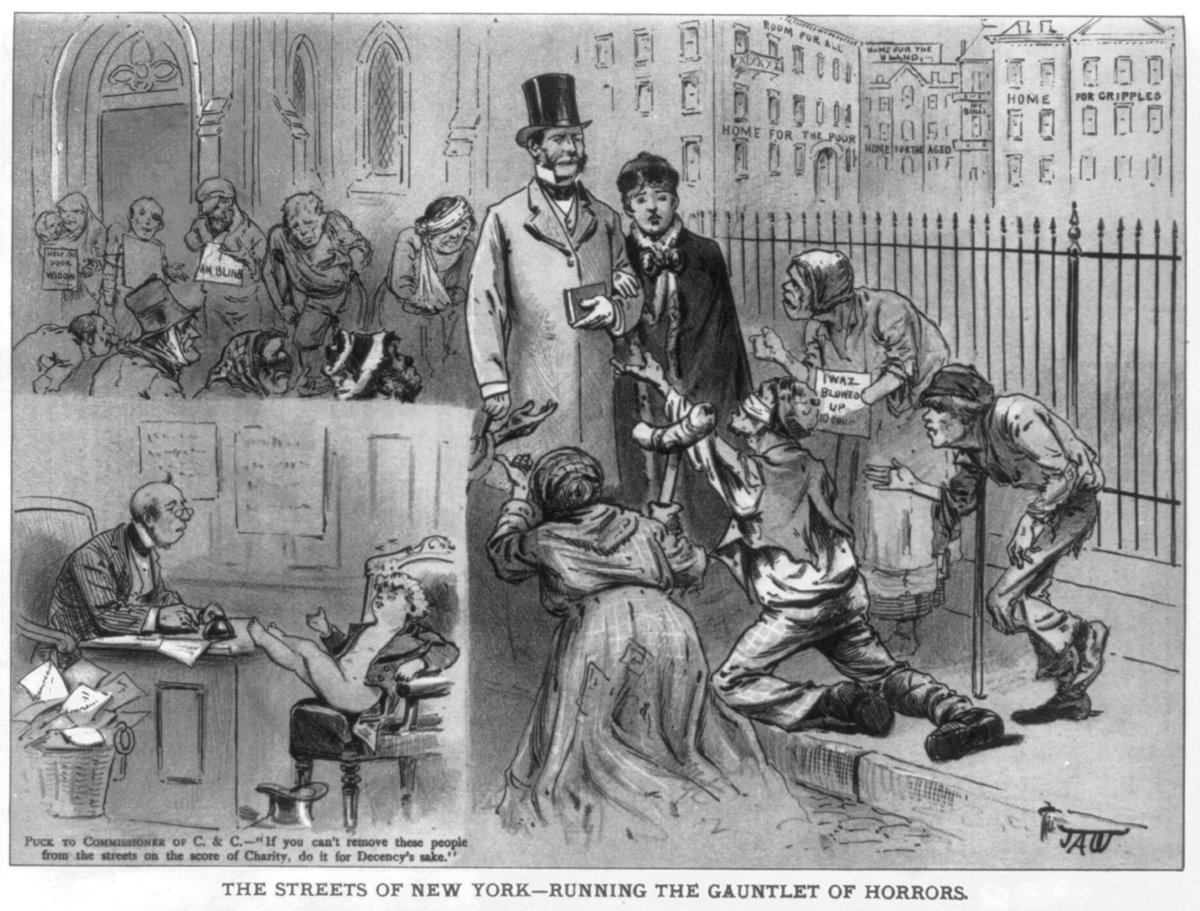
"From the late 1860s until the 1970s, several American cities had ugly laws making it illegal for persons with "unsightly or disgusting" disabilities to appear in public. Some of these laws were called unsightly beggar ordinances."
Ugly Laws, Wikipedia

Political cartoon stereotyping poor disabled in New York City © Library
of Congress


Today a hearing on discovery motions was scheduled to take place at  9am, in San Jose in the case of R. Flowers, Et Al v V. Gopal, Et Al.  The plaintiffs are continuing to demand a permanent injunction against the Gopal family's autistic son, despite the fact that the Gopal family no longer lives in the neighborhood and neither do the Flowers. The plaintiffs claimed that the presence of the Gopal family's child in their neighborhood dropped property values. Actually, the fact that the Flowers' were renters dropped the property value. The Gopal family owned their home. I am trying to grasp how saying a 9 year old child appearing in public can drop property values is not invoking the ancient "Ugly Laws", and how people can feel comfortable putting this on legal documents and presenting it in court in this day and age. 

The Autism Society views the potential for harm against families who have autistic loved ones as great if lawsuits of this ilk become a pattern. Sadly they never mention the harm that is being incurred by the child himself or those who share his neurology.

Some experts wonder how this case progressed at all. Quoting the San Jose Mercury News:

"Stephen Rosenbaum, a lecturer at the UC Berkeley Law School, who specializes in disability rights and is familiar with the lawsuit, said he is surprised the case has continued as long as it has."

""This is something that should never have gone to court, in my view," said Rosenbaum, who is also an associate professor at Golden Gate University School of Law. Instead, he said, it should have been resolved through an informal dispute resolution process or mediation; sources, however, say that route failed."

I do agree with professor Rosenbaum's professional opinion that an informal dispute process or mediation is the route through which this dispute between three former neighbors should have been resolved. I also believe autism advocate, parent, and attorney James Gallini is quite accurate in his observation of this case:

"This is a very dangerous lawsuit in California and, because of the legal definitions of 'nuisance' and 'public nuisance', dehumanizes our autistic citizens by defining them as something other than human to be controlled or removed and as chattel (an item of property other than real estate). The Judge in this case did enter a temporary injunction against this family and their child. In short, a restraining order to prevent "irreparable harm" to the community and property while the legal issues are being heard."

My fear is that the preponderance of recent court cases are by adjudication placing a de facto label of human chattel on people with invisible disability in general and autism in particular. One could almost define recent legal cases in disability rights case law in California, and I am thinking of cases like San Francisco v Sheehan, as echoing  structural ableism remaining from the infamous  "Ugly Laws," the first of which appeared in 1867 in, by sad coincidence, San Francisco, California. 

This is a typical example of ugly public comments left
under local news articles about R. Flowers v V. Gopal. As you can see
Ms. Schroeder takes the opportunity to vent her resentment
 of what she terms "3rd world immigrants" says "How about India footing the bill?"
and other hateful comments referring to keeping children on a leash
and  the idiotic idea that autistic children have,
and this is in all caps "NO DESIRE to play with other children.;
IT IS A FACT." She is a perfect example of the taint of ableism & ethnic biases
this case is bringing to the surface. 
By finding legal ways to strip neurodivergent people of their competence in court, our legal system erases them from their own trials, and this opens the door to a terrifying future of reverting intersected disabled members (please note the Gopal family is an ethnic minority) to the distancing and dehumanizing status of "human chattel"  at a time when a visible resurgence in  a polarized public's affection with eugenics and euthanasia is resulting in the passage of laws that threaten disabled people and their families outright. The rights of disabled people to community access and self determination guaranteed by the American's with Disabilities Act and the Olmstead decision can potentially be legally whittled away by these types of legal cases. All under the gateway guise of public nuisance litigation; all the while plaintiffs like the Flowers miseducate the public that somehow the threat is the disabled person rather than the bias at the intersection of ethnic hatred and ableism that drives the negative way intersected disabled people are treated in their own communities.

Proctors answering document in U.S.
v Amistad © National Archives
I am a Black woman, and therefore am painfully aware of what the status of "human chattel" means within American caselaw. The primary challenge to abolitionists during the attempt to defend the free African men and women captured in Sierra Leone and sold into slavery illegally, was the concept that in the United States, anyone who fit the definition of a Black slave was considered "human chattel". Despite the fact that all parties in the case of United States v. Libellants and Claimants of the Schooner Amistad agreed that these men and women were born free and were sold into slavery in violation of international laws, in our court system they were considered property. They had no voice in the series of trials on which their freedom hinged.  The case was escalated through the court system and was eventually won because "attorney Roger S. Baldwin successfully argued this case to the Supreme Court by the use of narrow, property-law based arguments rather than moralistic, broad-based attacks on slavery itself" knowing that any argument of their humanity would not sway the court to free them. In the end only 35 men survived the ordeal of years of unjust imprisonment in horrid conditions and bitter litigation to be freed and returned their homeland.This is what it means to be legally labelled "human chattel." So the successful injunction against this young child should disturb our entire community, as should the inherent violation of the child's right to privacy in the plaintiffs' demand for this child's entire school and medical records. It is a clear indication that the plaintiffs cannot otherwise meet their burden of proof and seek instead to use evidence directly related to this child's disability against him to make their case. Think about the implications of that. It implies that a person who has any invisible or psychiatric disability has no expectation of protection if someone wants to cash in on behavior related to said disability. Should treatments and supports delivered to assist a child in the classroom and at home be used against then in a case where there is insufficient event based evidence to collaborate the plaintiff's claims of public nuisance in court?

In our country, those who are different lose the legal right to any expectation of privacy for themselves and their children.

Poster for Tom Wiggins ©Word Stage
I should also discuss the case of Blind Tom Wiggins briefly because the fact that he was both born a slave and an autistic savant made the tragedy of his life that much more relevant to the case of Flowers v Gopal. The litigation for possession of Tom, whose earnings as a world renown pianist were estimated at the equivalent of $5 million dollars today, was bitter and lengthy and continued as long has he was earning money touring. Meanwhile Tom was locked up in a series of hotel rooms while a series of owners squandered his earnings. After the Emancipation Proclamation  and the end of the Civil War, Tom remained a slave. He was in fact called "The Last Slave in America" at one point. The ex wife of one of his owners finally won ownership of him by tricking his mother into suing her ex-husband's kin for her son's emancipation. Once freed, the woman convinced Tom's mother to sign guardianship of him to her. In order for anyone suing for ownership of him to keep complete control of Tom regardless of the Emancipation of all slaves, he had been declared insane and thereby legally within the category of "human chattel". Abuse of intersected autistic people through legal means is just that old and just that simple.

In fact one of the foundational issues with the way that autism as a disability is dealt with in our society is this attitude that autistic people are de facto chattel unless they continually prove their competence. This frightening attitude is at the heart of deadly results like the infamous case of Kade Hanegraaf, an autistic teen who at 14, was the victim of "debarking" surgery  because his parents saw him as "human chattel" and therefore consented to this monstrous procedure.  Please see Lydia Brown's moving essay on literal silencing for detailed information here.

I hope you can all see how critical the presumption of competence is to the entire autism community.  It continues to confound me that other parents fail to see how critical this is, and how damaging the presumption of the incompetence of our own offspring has been to our community.

In this entire litigation, we do not know:

1. Why Robert and Marci Flowers and their former neighbors insist on continuing this legal action when the Gopal family moved away from the neighborhood months ago, and the Flowers have since moved from it as well, and how this pursuit of monetary gain through legal action despite the fact that the Gopal family has done everything to accommodate the plaintiffs, including leaving their home of seven years, is not discrimination based on the child's disability;

2. What the autistic child in question's ability to communicate is, and whether he can communicate and therefore give testimony in his own defense;

3. Why there has been no mention of the child's rights under the Olmstead decision and the ABA to community access  with supports, and whether or not, once behavioral supports were put in place for this young man whenever he entered the local community, the continuance of this case actually violates of the child's right to community access.

4. Whether the court's injunction was made after the child left the community in question, which would make no sense and whether further permanent injunctions in light of the fact that both one of the plaintiff families and the defendant family no longer reside in that community, are violating their rights as well.

5. What has been done on the part of the defense team to insure the Gopal family is not being targeted  based on their ethnicity and insure no bias is present in the court proceedings against them? How much of what is going on here is simply a lack of understanding of cultural differences that have led to this escalation?

Most of what has driven this case, and what drives this type of lawsuit is the goal of monetary gain against defendants who appear wealthy. It seems past time for privileged autism families to take notice. This case is dangerous because it can give bad people the idea that they can trump up charges against autistic people who may be unable to respond or defend themselves and sue wealthy autism families for damages. It is also a dangerous byproduct of the way autism is presented by  organizations who insist on displaying autistic children and adults as helpless, raging, human chattel, thus stripping them of human rights, destroying their access to their communities and causing great harm to those who they claim to advocate for. Our community needs to urgently work to change how the public and the legal system view autistic children and adults. If we don't, our loved ones will pay the consequences.


Resources and References:
-------------------------------
R. Flowers, Et Al Vs V. Gopal, Et Al
http://tinyurl.com/njfoezw
http://www.sfautismsociety.org/blog/neighbor-lawsuit-seeks-to-declare-autistic-boy-a-public-nuisance
http://www.contracostatimes.com/breaking-news/ci_28832427/sunnyvale-neighbors-sue-banish-autistic-boys-family-claiming

San Francisco v Sheehan
http://thinkprogress.org/justice/2015/05/18/3659969/supreme-court-justices-wont-let-mentally-ill-woman-sue-police-shot/
http://www.scotusblog.com/case-files/cases/city-and-county-of-san-francisco-california-v-sheehan/

Harm from the "Human Chattel" attitude embedded in Structural Ableism
The Literal Silencing of Kade Hanegraaf
http://www.autistichoya.com/2013/09/literal-silencing.html
http://www.salon.com/2013/09/27/is_surgically_altering_an_autistic_boys_voice_cruel_or_kind/

Violation of Disabled Bodies for Caregiver convenience - The Case of Ashley X
http://content.time.com/time/nation/article/0,8599,1574851,00.html

Lifelong Violation of Human Rights: The Case of Autistic Savant Blind Tom Wiggins
http://www.blindtom.org/who_was_blind_tom.html

Kidnapped Africans as "Human Chattel" In American Caselaw:
https://www.archives.gov/education/lessons/amistad/proctors-answer.html
http://law2.umkc.edu/faculty/projects/ftrials/amistad/Ami_trialrep.html
http://law2.umkc.edu/faculty/projects/ftrials/amistad/AMI_BBAL.HTM

The Ugly Laws
https://en.wikipedia.org/wiki/Ugly_law
https://madeinamericathebook.wordpress.com/2011/01/19/ugly-or-needy/
http://www.loc.gov/pictures/item/2006681441/

Sunday, August 16, 2015

At The Intersection of Appropriation and Erasure In Activism

Alicia Garza  stands with the words Black Lives Matter
taped over her mouth to represent the erased voices
of female  and female identifying black victims, in
 solidarity with #SayHerName Protesting credit X-Spore. net
In "A Herstory of the #BlackLivesMatter Movement by Alicia Garza" on The Feminist Wire, Ms. Garza discusses herself, Patrice Cullors, and Opal Tometi uniting to create the ' 'Black Lives Matter' hashtag, building the infrastructure to transition it from social media to the streets, then organizing and executing  the first #BlackLivesMatter ride. But what this  essay is really about is something that all of us who are intersected members of any activist community have been subjected to. It is about theft. In this case, the theft of Black Queer Women’s work. It happened in two steps: appropriation and erasure.
Ms. Garza's description of how other groups, activists, and corporate entities appropriated their work and then erased the existence of these three powerful activists from the movement they established and took to the streets is painful to read. Quoting Ms. Garza:

 "Suddenly we began to come across varied adaptations of our work–all lives matter, brown lives matter, migrant lives matter, women’s lives matter, and on and on. While imitation is said to be the
Patrisse Cullors, Opal Tometi (center) and Alicia Garza (right),
black, queer, founders of #BlackLivesMatter
 credit Madame Noire
highest form of flattery, I was surprised when an organization called to ask if they could use “Black Lives Matter” in one of their campaigns. We agreed to it, with the caveat that a) as a team, we preferred that we not use the meme to celebrate the imprisonment of any individual and b) that it was important to us they acknowledged the genesis of  #BlackLivesMatter.  I was surprised when they did exactly the opposite and then justified their actions by saying they hadn’t used the “exact” slogan and, therefore, they deemed it okay to take our work, use it as their own, fail to credit where it came from, and then use it to applaud incarceration."


"I was surprised when a community institution wrote asking us to provide materials and action steps for an art show they were curating, entitled “Our Lives Matter.”  When questioned about who was involved and why they felt the need to change the very specific call and demand around Black lives to “our lives,” I was told the artists decided it needed to be more inclusive of all people of color. I was even more surprised when, in the promotion of their event, one of the artists conducted an interview that completely erased the origins of their work–rooted in the labor and love of queer Black women."

 I've seen this progression of appropriation and erasure happen repeatedly in the disability rights activism community as well. The sad thing is when people and organizations are called out on their behavior,  they often silence or ignore demands they right their divisive and destructive actions.
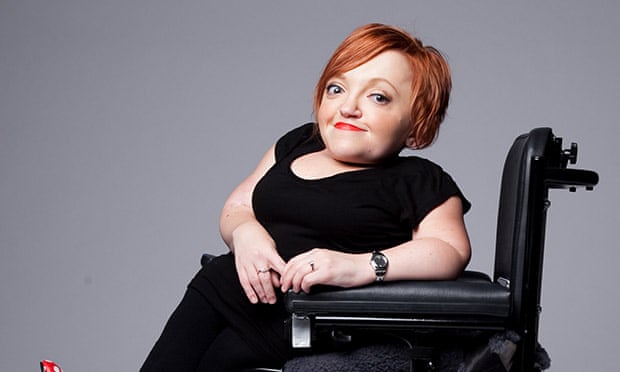
The late Stella Young: disability rights activist and comedian
Photograph: SmartArtists PR
The newest example of the attempted posthumous appropriation of what a disability rights activist represented, thereby erasing her body of work as an activist by objectifying her was the public bungle of TEDx Sydney after the death of the great activist and comedian Stella Young. Her TEDx talk "I am not your inspiration porn, thank you very much" makes it clear that disabled people should not be objectified,  used as scenery to inspire others or create awareness . Googling Stella Young results in numerous interviews and presentations  that make it clear probing and embarrassing personal questions to disabled people are not acceptable but this clearly didn't get through to TEDx, who launched #StellasChallenge, a disability awareness campaign that made it clear when the late Ms. Young spoke, TEDx wasn't listening. The outrage from Stella's friends, peers, and fellow activists brought TEDx to its senses, but the organization, in trying to push this flawed awareness campaign, might have succeeded in erasing a great activist's life work when the intent was to honor her. At least TEDx listened to everyone in the end and are making an effort to correct their mistakes.

Autism advocacy is awash with this behavior. Here are two examples I am using because I feel that autism rights organizations have failed to do what the rest of the disability community did to save the good work of the late Stella Young. It is time to for us to put a stop to this.

 Co-opting The Neurodiveristy Movement by Appropriation and Erasure 

Let me tell you about an activist I've known since her student activist days at Georgetown, and then illustrate what I mean.

I asked Lydia Brown to self identify for me. My intent was to learn their preferred identifiers and to refer to them respectfully. So let me let them tell you who they are:
" I am queer, genderqueer, east asian transracial adoptee, and disabled, and I also have a Christian upbringing, class privilege, elite educational privilege, and citizenship status. Because it's important to acknowledge and name both my oppressed and privileged identities/experiences." 
Lydia Brown reading a section of Frederick Douglass' speech
What to the Slave is the Fourth of July at the annual
 communal reading on Boston Common in solidarity
with #BlackLivesMatter #DisabilitySolidarity
Photo credit Pamela J. Coveney
Lydia accomplished great things while still in high school and brought that drive to create transformative change to college. While continuing their studies and activism, they also began a blog, Autistic Hoya.  All of this hard work brought awards, accolades, and got them invitations to speak as a topic expert  at university campuses and conferences throughout the country.

 So in 2013, Lydia was invited to speak at William and Mary as part of the college's Neurodiversity Initiative.  The events that followed their presentation led to one of Lydia's  most powerful and overlooked essays, which discusses the co-opting of the neurodiversity movement by the same people and organizations who, whether with malice aforethought or unwittingly, perpetuate structural ableism by marginalizing the movement and those activists and allies in it.  The essay illustrates eloquently the type of appropriation and erasure rampant in autism advocacy by a stakeholder community that continues to denigrate, infantalize, and objectify autistic adults.

"Co-Opting the Movement: Autism Speaks, John Elder Robison, and Complicity in Oppression"
is a groundbreaking essay that should be required reading for anyone trying to understand what is wrong with autism advocacy as it exists in general and what is wrong with Autism Speaks in particular. In Lydia's own words:

"An individual autistic person with close ties to organization that promotes an appalling vision of a marginalized group that is certainly not in alignment with even the most basic aspects of the neurodiversity movement has not only lent his voice to that organization but has been named as the public face and leader of a program supposedly committed to the empowerment of autistic people, and all this in the name of neurodiversity. This is incomprehensible. “
"A few weeks ago, in conversation with a stranger, I was asked if it wouldn't be possible to compromise by collaborating with Autism Speaks on issues where our work might overlap. This is not possible. It will never be possible for me to work with Autism Speaks for as long as their philosophies, mission, and rhetoric remain the same as they are now. Our most basic goals are fundamentally and radically different. For you to ask me to cooperate with my oppressor is deeply insulting. I refuse to submit to complacency with the dominant narrative of autism as advanced by Autism Speaks, and I refuse to make myself complicit in my own oppression.”
"And even if Autism Speaks has absolutely no direct involvement whatsoever with Mr. Robison's activities at William and Mary, he has already been positioned as a leader in the neurodiversity movement, and this rhetorical positioning already serves to co-opt the movement with Mr. Robison's work, which is decidedly outside the neurodiversity movement and has been repeatedly criticized from within it.”
 The college's use of the word neurodiversity was a ruse to redefine it and as such assist in steering autism stakeholders away from interest in the civil rights of their autistic loved ones while misleading neurodivergent students entering the campus. Appropriate. Erase.

 I don't know what Mr. Robison did in his one year tenure as Neurodiversity Scholar In Residence . But what is critically important in this episode is to understand what role privilege plays in the appropriation of the groundwork others have laid and what their erasure from the landscape of their own activism means. Witness it and know it for what it is. In this particular case, Mr. Robison was the privileged person who benefitted from the erasure of a  neurodiversity movement that he criticized and dismissed in the past, erasing the importance of all the activists  who aren't public figures or white, cisgender, wealthy, published authors, whose passion, intelligence, professionalism and persistence brought civil rights in the autism community to where it is today.

Appropriation and Erasure by Autism Speaks

Autism Speaks continues to promote a corporate culture which incorporates silencing of autistic activists by structural appropriation and erasure. When their own rhetoric, which was extremely offensive, began to be offensive to a growing number of parents, their response was to appropriate the language of disability rights advocacy and twist it to erase its impact and effectiveness. When autistic activists shouted "acceptance not awareness" Autism Speaks derailed the term acceptance by inserting a condition for its members. "We accept our autistic children, but we don't accept autism." You cannot separate the divergent brain of a person from that individual. Nor was this what was meant by the term "acceptance." But the appropriation of this term by medical model organizations has erased both its intent and its effectiveness and by doing so, is threatening erasure of the life's work of the autistic activists and allies who fought for acceptance against Autism Speaks and its predecessors for more years that Autism Speaks has been in existence.

Autistic Activist Kassiane Sibley is in a four year fight
against the appropriation of her work by Autism Speaks.
Photo Credit Jon Ems
Not satisfied with that, Autism Speaks wanted to take the concept of self advocacy and skew it so that self advocacy became a term they could control by acquiring autistics to fit their redefined version of self advocacy. That would be self advocacy that agreed that autism was what was wrong with them and that autism somehow made them less that others . This was because for ten years, autistic self advocates had been the most vocal opponents of their ableist fundraising campaigns and offensive rhetoric. So in 2011, Autism Speaks published an online toolkit that featured a 10 page section on self advocacy. As Liz Ditz explained to readers in her essay, "When National Charities Offend Those They Are Supposed To Serve", Autism Speaks appropriated a quote from autistic author,  educator, and  activist Kassiane Sibley's 2004 essay 
"Help Me Help Myself: Teaching and Learning Self-Advocacy", which was published as a chapter in Ask and Tell: Self-Advocacy and Disclosure for People on the Autism Spectrum, published by the Autism Asperger Publishing Company (AAPC). Kassiane discovered the theft in February of 2011 and has fought a four year battle to have the quote completely removed from the online toolkit. Autism Speaks appropriated her intellectual property without proper consent and flatly lied about this. Unlike TEDX Sidney, they did not acknowledge the wrong they did for years. Not only has Autism Speaks never issued a public apology for appropriating Ms. Sibley's work, they also tried to repost a version of their toolkit with Kassiane's intellectual property white texted back in it. So the document and the internet will have to be continually monitored to insure they don't try using it again in any form.

In seeking answers as to why Autism Speaks, with huge funding and resources at its disposal, would feel the need to besmirch the name of a known anti Autism Speaks activist and veteran of the neurodiversity movement, appropriate her work without permission, and refuse to apologize and take it down, I can only quote Alyssa at Yes, that too;
"And can we maybe think about the fact that this is an organization run by mostly white middle to upper class parents of autistic kids doing this to a poor, multiply disabled, Autistic woman of color? Did they maybe purposefully choose someone they'd expect to be unable to fight much?"
I have had people contact me requesting I submit articles on autism for publication. When I was naive enough to believe my intellectual property was secure, I would submit work and then reel in shock while editors proceeded to re-write and return a final draft in such a state that I was unable to identify what I wrote in the first place. I've ended up retracting such articles despite knowing some would have gained my writing a national audience. A woman who worked for another organization later admitted that she was told to contact me under the pretext of interviewing me to try and force an admission that I was either autistic or otherwise neurodivergent, in order to discredit my body of work in disability rights. I am not certain which was worse, the idea that any public entity would assume something written by an autistic topic expert is of less import that something written by someone who gave birth to an autistic person, or that somehow "outing" me as autistic would discredit me. This is the kind of ableism autistic people fight to overcome.  Things I've written have been used as templates for other articles by parents with "better optics" and white demographics without citing me as a source. Someone posted publicly that my resources on anything wouldn't help her because of my demographics; which she later clarified to say that because I was a Black autism parent, any information I might have was beneath her as she was white.


Faded black and white image of author on a white field with the hashtag
Stop Erasing Us ©Kerima Cevik
Over time, I had accepted that this would be repeatedly done to me and tried to seek ways to work around it. My work around plans have thus far been successful.  I find however that I have no tolerance for it being done to other activists and allies, particularly those who are the past, current, and future voices for both their marginalized populations and the greater autism civil rights community. We don't have such an abundance of activists that we can afford to allow their erasure and the appropriation of their body of work. We should not be allowing this to happen. When we see it we should speak up about the wrongness of it and support any action needed to rectify it. Too many have not and this enables the abuse to continue.

Allies, colleagues, and others who want the true founders of #BlackLivesMatter to be acknowledged have gone back to the roots of the movement to fight against the appropriation and erasure of these tremendous Black Queer Women. They have taken to social media and are countering with truth, art, spoken word, everything they can each time an appropriative event happens. I believe we need to look to the same place that three mighty women grieving over Trayvon Martin and having no idea the avalanche of deaths to follow went to have their voices heard and we must also act to begin to end the erasure of our activist and ally work. Maybe we should also begin with a hashtag.

#StopErasingUs


Further Reading References and Resources:
A Herstory of the #BlackLivesMatter Movement by Alicia Garza
http://www.thefeministwire.com/2014/10/blacklivesmatter-2/
#SayHerName
http://www.democracynow.org/2015/5/20/say_her_name_families_seek_justice
The Posthumous Objectification of Stella Young
Stella's talk against inspiration pornography: https://youtu.be/8K9Gg164Bsw 
Disability Community's response to #StellasChallenge:
https://storify.com/SFdirewolf/no-more-awareness-stellaschallenge
On the take aways from TEDX Sydney's bungle:
 http://theconversation.com/doing-justice-to-disability-the-upside-of-tedxs-stella-bungle-42324
The Corrupting of the term Neurodiversity
http://www.wm.edu/news/stories/2013/neurodiversity-advocate-robison-to-teach,-consult-at-wm123.php
Autistic Hoya On Co-opting the Movement
 http://www.autistichoya.com/2013/11/coopting-the-movement.html
http://www.autistichoya.com/2013/04/erasure-and-silencing-by-omicron-pi.html
Kassiane Sibley at Neurodivergent K on Appropriation and Erasure by Autism Speaks
http://timetolisten.blogspot.com/2011/02/autism-speaks-shut-up-and-listen.html
The Theft Of An Intersected Activist's Work By Autism Speaks
http://yesthattoo.blogspot.com/2014/01/autism-speaks-are-work-stealing-white.html
http://lizditz.typepad.com/i_speak_of_dreams/2012/01/when-national-organizations-offend-those-they-are-supposed-to-serve.html