Kasap et derdinde, koyun can derdinde
(The butcher is concerned with meat, the sheep is concerned with survival)
-Turkish Proverb
 |
| Mustafa's well-worn backup AAC device, an iPad Mini, with TouchChat HD App. Most parents wanting iPads for AAC support don't know they actually need 2 iPads, one for backup in case the other is damaged, lost, or stolen @Kerima Cevik |
"I've been trying to find a way to get him an iPad," she said to me, her voice cracking.
"I just know if we could afford to get him an iPad, you know, with one of those language programs, that they would have to teach him to use it to communicate in school." "I could fight for that until they do." "He's fifteen now." "All this time they could have done more."
I kept my voice calm and even on the phone. "All this is true and that is a fine idea, but right now we have to focus on how we can make sure he has his seizure meds for the next two weeks."
"You can't keep using his emergency meds." " Let's solve that problem together first."
I talked to her about the Partnership for Prescription Assistance program. When her autistic son was out of the ER and back home stable and resting, I quietly asked what else they needed. "Have you been keeping up with your husband's medications and your own as well?" "Are you behind on your power and heating bills?" "When was the last time you and your husband ate?"
"But what do you think about my iPad idea?" She began again. "I just know if I keep him on a GFCF diet and get him an iPad, he'll be more able to ask for help when he needs it." "His service provider says he's too disabled for an iPad but I just know..."
I told her I would send her contact information for MDTAP, The Maryland Assistive Technology Cooperative, and to reach out to them for possible assistive tech evaluations and to have him try some AAC devices on loan. She was ashamed of her state of hunger, ashamed the DDA would discover what they'ed been doing to afford the special diet and out of pocket things for their son. She was terrified they'ed be seen as unfit parents and their son would be taken from them.
"Promise to keep going to these food pantries?" I asked. " I promise," she answered. I told her there was no shame in needing food, that their present impoverished position had little to do with any failing on their part, and their son needed them to be fit and well nourished to help him. This was more important than anything else, that they all be healthy and safe.
We discussed nonprofits that could help defray the cost of their heating bills.
When she called back from the nearest food pantry to say that everyone was kind and she was no longer ashamed, saying they would be okay and I was assured they would help another family in need, I hung up for the last time and let the tears come.
How could a family with a teenaged son with intense support needs, a family who despite being long time disability waiver recipients were impoverished, afford a $750 iPad along with the necessary protective cover with built-in amplifiers, as well as the language app required to give him the speech support he needed? The total cost was in the neighborhood of $4,000. In fact, they would need a backup AAC device as well, pushing this to nearly the same cost as the Dynavox AAC device the iPad + AAC app were competing with.
How could their son's social worker not notice that his mother, his primary care provider, was slowly starving to death in order to feed her son the special diet the extremely well off autism parents swore by? She wanted to change her son's life. I didn't have the right or the heart to tell her that wasn't fiscally possible.
How could their son's social worker not notice that his mother, his primary care provider, was slowly starving to death in order to feed her son the special diet the extremely well off autism parents swore by? She wanted to change her son's life. I didn't have the right or the heart to tell her that wasn't fiscally possible.
In the parallel universe of Autism in the American Dream, it's Autism Acceptance Month, and Apple has rolled out two ads for iPad that tell the story of an autistic teen named Dylan, who types to communicate. Here is one of them:
When I saw this ad, I thought of that particular nonwhite mother, and her tremendous desire for an iPad for her son when she and her husband were giving up everything, including food security, and living not month to month or day to day but hand to mouth to provide for him. What about her son's right to communicate? What about their dream?
I witnessed the whipped up virtual controversy over whether or not Dylan, the teen in the Apple ad, is using Facilitated Communication (FC) to type, when throughout the ad he appears to be typing independently. I thought about the staggering level of privilege inherent in the autism conversation. How proudly people discuss how affordable this technology is for autistic people when that is true only in the universe of the Autism Wars of privilege and that is reflected in this excellent ad with this very fortunate white autistic teen, whose entire life was changed with an iPad, a full-time speech pathologist, and any other supports he needed that the families I witness struggling could never afford.
I witnessed the whipped up virtual controversy over whether or not Dylan, the teen in the Apple ad, is using Facilitated Communication (FC) to type, when throughout the ad he appears to be typing independently. I thought about the staggering level of privilege inherent in the autism conversation. How proudly people discuss how affordable this technology is for autistic people when that is true only in the universe of the Autism Wars of privilege and that is reflected in this excellent ad with this very fortunate white autistic teen, whose entire life was changed with an iPad, a full-time speech pathologist, and any other supports he needed that the families I witness struggling could never afford.
While those comfortable parents who dominate the autism conversation argue about the Apple ad oblivious to the ableism inherent in their presumption of Dylan's incompetence, people are wondering how to provide basic communication supports for their autistic loved ones in the only setting they can afford such services - the public school system. Schools give them as little support as they can in one of the most critical areas of nonspeaking autistic support need; speech and language. But of course, none of this matters to families like Dylan's or those arguing about whether Apple's latest ad supports FC.
Does it dawn on these opposing parties screaming at one another that very few families who aren't flush with disposable income from either the generosity of extended family members or immediate family wealth, can even afford FC training, or other typing based options like Rapid Prompting Method (RPM) for their children? Do these people have any clue of how perilously close so many families of autistic teens and adults are to catastrophic poverty? How many autistic adults who actually need the communication support of an iPad feel fortunate if they qualify for section 8 housing, health care, and food stamps?
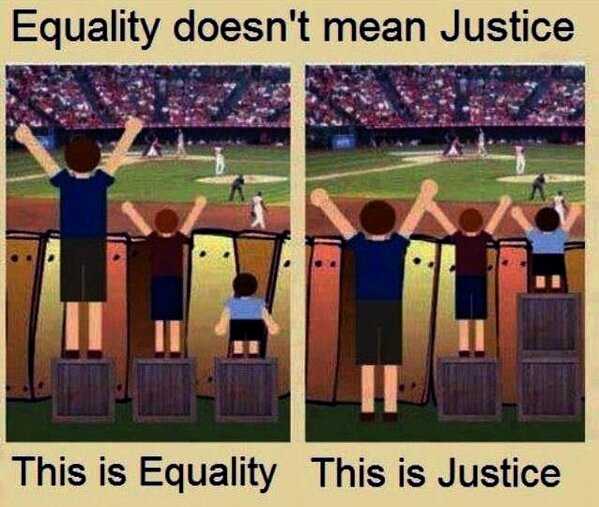
This is the root of the problem with the Autism conversation from this place of intersectionality where I stand witnessing all this disparity in priorities and arguments of what is needed while crises continue for families who aren't white and aren't wealthy.
In the hard world of real life outside the privileged American dream, iPads are neither available nor are nonspeaking autistic children of color assessed for their use as speech devices in public schools. IDEA requires such assessments for assistive technology in areas of critical deficiencies that bar learning. But they are rarely done. Printing PEC cards are cheaper than training teaching teams to support speech devices. Speech-language pathologists are too pricey to have them working with nonspeaking kids in public schools the 40 hours per week they would need to begin to master AAC communication on the most inexpensive AAC adapted iPad. No IEP team would create an individualized education plan for one nonspeaking student to receive one year of nothing but speech language towards mastery of a communication device. Intensive AAC speech support towards fluency is the way the world of special education and individualized education plans should work, but it does not.
Meanwhile far away in the land of autism for the American dream, parents shout for full academic curriculums and full inclusion for autistic children. Because their children already have all the outside speech, OT, PT, and any other supports they need, so their priorities are now social skills and integration, for the renewed dream of college for their offspring.
Meanwhile far away in the land of autism for the American dream, parents shout for full academic curriculums and full inclusion for autistic children. Because their children already have all the outside speech, OT, PT, and any other supports they need, so their priorities are now social skills and integration, for the renewed dream of college for their offspring.
The African American retired professional with the 15-year-old nonspeaking autistic son will have to continue to fight for that iPad and language app, because when the cost of living soars while a family's income is fixed they can't save any money. An iPad as an AAC device is a dream very much like winning the lottery. A dream with a one in a million chance of happening.
I often wonder if that family was caught up in the Baltimore riots, trapped in the city while getting his medical care. I wonder how they are faring in the struggle to survive. I wonder about another family, an African American single father with two grown nonspeaking autistic sons who like to wander. They lived near Freddie Gray's neighborhood, and I wonder how they fared during the riots too.
I was the advocate of last resort. People heard about me through word of mouth. I would try and solve the emergencies they couldn't tell their service providers, schools, social workers, and distant relatives about and tell them how they could help themselves to solve any future ones on the condition they did the same for another family. Then they were on their own. The work was so brutal that for the sake of my own son's needs and my own emotional and physical health, I stopped doing it.
I was the advocate of last resort. People heard about me through word of mouth. I would try and solve the emergencies they couldn't tell their service providers, schools, social workers, and distant relatives about and tell them how they could help themselves to solve any future ones on the condition they did the same for another family. Then they were on their own. The work was so brutal that for the sake of my own son's needs and my own emotional and physical health, I stopped doing it.
This is the truth of the parallel universes creating a canyon divide in the autism conversation. I am a witness to the frivolity of arguments about the method by which an autistic teen learned to type independently, thus gaining autonomy, while I try to shout that families of color are now slipping into poverty, and wanting an iPad based AAC device just as desperately as the well-off white mother in Apple's latest iPad ads for Autism Month wanted one for him.
The butcher is concerned with meat, the sheep is concerned with survival.
The voices of privilege are concerned with whether or not an autistic teen named Dylan is using FC in Apple's iPad ads for Autism Acceptance Month. I am concerned with how yet another generation of nonwhite, nonspeaking autistic children will gain access to the relatively affordable, but still expensive, iPad/Touchscreen devices, speech apps, and the speech supports they have a legal and human right to have in order to achieve even baseline communication skills for their own survival in a hostile world.
-----------------
Resources:
On Apple's iPad for Autism Acceptance Ads
Emily Willingham, Ph.D
http://www.forbes.com/sites/emilywillingham/2016/04/02/apple-goes-beyond-autism-awareness-promotes-acceptance/#11f39b6c1385
On Maryland's Assistive Technology Cooperative
http://www.matcoop.org/about.htm
On Disparity in Communication Rights In Public Schools
http://autisticadvocacy.org/2016/03/asan-files-ada-complaint-on-communication-access-in-schools/
On the Partnership for Prescription Drug Assistance - a free program
https://www.pparx.org/
The butcher is concerned with meat, the sheep is concerned with survival.
The voices of privilege are concerned with whether or not an autistic teen named Dylan is using FC in Apple's iPad ads for Autism Acceptance Month. I am concerned with how yet another generation of nonwhite, nonspeaking autistic children will gain access to the relatively affordable, but still expensive, iPad/Touchscreen devices, speech apps, and the speech supports they have a legal and human right to have in order to achieve even baseline communication skills for their own survival in a hostile world.
-----------------
Resources:
On Apple's iPad for Autism Acceptance Ads
Emily Willingham, Ph.D
http://www.forbes.com/sites/emilywillingham/2016/04/02/apple-goes-beyond-autism-awareness-promotes-acceptance/#11f39b6c1385
On Maryland's Assistive Technology Cooperative
http://www.matcoop.org/about.htm
On Disparity in Communication Rights In Public Schools
http://autisticadvocacy.org/2016/03/asan-files-ada-complaint-on-communication-access-in-schools/
On the Partnership for Prescription Drug Assistance - a free program
https://www.pparx.org/