Showing posts with label Disability caselaw. Show all posts

Saturday, January 20, 2018

#AutisticWhileBlack: The Terrifying Case of Rebecca Hall

Screenshot of a photo of Rebecca Hall, presented
by her twin during a press conference. Image of
a beautiful Autistic African American young
Woman with center-parted long black hair and
a matching blacktop. © Chandler Family
It was 25 degrees outside that Tuesday, January 9th, 2018. Psychotherapist Imamu Baraka was leaving his office across the street when he saw staff from the University of Maryland Medical Center Midtown in the process of dumping a woman at a bus stop in only a hospital gown and socks. Furious, he began recording the event on his cell phone, called 911, made certain the woman was readmitted to the ER, and concerned no one would believe him, uploaded the video. The frightening footage, evidence of a heinous practice called "patient dumping" went viral.

A week before, Cheryl Chandler had reported her 22-year-old daughter, Rebecca Hall, missing.  Six years ago, Rebecca had been diagnosed with Asperger's and a psychiatric disability.  She had been placed in a group home in Charles County, MD, but later evicted from it on the excuse that she refused to take her medication. Her family enrolled her in what they were told was an intensive inpatient treatment program. How Rebecca went missing from there is not clearly understood.

Her mother was browsing the Internet when she happened upon the trending video and played it. She doesn't remember what happened after the moment she recognized the young woman in the hospital gown on the street was Rebecca. According to family members, she screamed her anguish. Ms. Chandler immediately called the medical center demanding to know the location of her daughter but they refused to tell her. Finally, after calling them, the police were able to locate Rebecca at a homeless shelter.

During a press conference in Rebecca's attorney's offices, unable to hold back tears, Rebecca's twin sister Rosslyn read a letter from Rebecca, thanking everyone for their help, telling everyone she was safe. Ms. Chandler was adamant that Rebecca was not homeless or uninsured, and was very much loved. It was Ms. Chandler who had hired an attorney for Rebecca.

There is such massive failure at the core of what happened to Rebecca. These nightmarish events, that frighten every stakeholder in our community, make it clear that every system that is supposedly in place to help our disabled children throughout their lives is broken. So for Rebecca, I want to not just point out what it means to be #AutisticWhileBlack, but also touch on alternatives steps to eventually ensure that the rest of the lives of our loved ones aren't scenes from American Horror Story.

Late Diagnosis
Rebecca did not receive a diagnosis of Aspergers (a diagnosis that should be ASD because the term Aspergers is no longer part of the DSM-V) until she was 16. Years of coping with a disability no one was aware of might very well result in trauma and subsequent psychiatric disability.  The extreme late diagnosis of African American women and girls, who are already subject to trauma from racial discrimination, colorism, and institutionalized misogyny, requires trauma-informed care solutions. Although the Baltimore City Health Department makes itself available for training in trauma-informed care, UMMC staff has either not availed itself of such training or UMMC is not administrating it. My question here is why?

Group Home Trauma
Then there is the myth that the best care for a disabled young adult with psychiatric challenges is the enforced compliance and regimented schedules of institutionalized settings such as group homes. Peer mentored community living spaces are more cost-effective, empower disabled clients with life skills, and integrate them into their communities such that they are known community members who are simply people neighbors and business owners care about and therefore hire, respect, and accept. The idea that the goal of group home residency is passively ingesting medications and being compliant drives resistance and fear in residence.  We do not know what compelled Rebecca to refuse her medications. She certainly did not wish to be homeless.  Who would? So the question should not be why was Rebecca 'non-compliant' so much as why is Rebecca's trauma, along with the agency she was accustomed to until her diagnosis day, being ignored?

We must move past the stigma and fear of psychiatric disability as it is portrayed in media and grasp that autistic adults who also carry a psychiatric disability label have the same rights as any patient does to safety, respect, and agency in their care.

Mental Health Care Inequity and Disparity
Then there is the injustice of health care inequity and denial for autistics of color in general and those who are autistic while black in particular. A canyon divide in quality of care for autistic children and adults of color and those of affluent white families exists. African American disabled children and young adults are consistently labeled more non-compliant and oppositional than their white peers and rejected more for dental care and primary care than their white peers. What we know about Rebecca's plight is UMMC did not treat her and from the video, she looked injured. Even after Mr. Baraka called 911 and Rebecca was readmitted into the ER, she was sent to another center for treatment and then placed in a homeless shelter.

No Continuity in Procedures for Recovering a Missing Autistic Loved One
Maryland has a silver alert law, passed to speed the locating of a missing senior with conditions like Alzheimer's or Dementia. There is no such law for Autistic children and adults because those opposed to it say that constant alerts would reduce the effectiveness of the two they have. Most of us aren't aware that Amber Alerts apply to a very narrow set of circumstances rather than being an alert for all missing children. Our African American community, in frustration with the lack of interest in our missing youth, has tried to leverage social media to search and find our own missing loved ones. In Rebecca's case, shouldn't the hospital have reached out to the police about Rebecca to ask if she fit the description of any missing person? Who ordered the discharge of a bleeding, vulnerable, near-naked patient to an outdoor uncovered bus stop in record low temperatures? What if Mr. Baraka had not been there filming? I have a nonverbal autistic teen son. The thought chills me to the bone. If Rebecca was in an inpatient program how was she lost? Could a simple medical alert necklace have been used to ensure her safety and identification when she needed help?

Patient Dumping
Patient dumping is against the law. Period. It is clear that Rebecca is not the first or only victim. The only way we can make certain this doesn't happen to anyone else's autistic loved one is to decide what each of us can do to make it clear we won't tolerate this happening to Rebecca or anyone else again. It is up to us. No one is going to do this for us.

Right now, what I see is autistic organizations so engrossed in public policy protests and actions to preserve Medicaid, the Affordable Care Act, and the ADA, (all of which are necessary but not their only obligations) that their primary responsibility as advocacy organizations, to protect autistic people and fight for them, has been ignored since the election. Moreso when the victims of gross maltreatment are disabled people of color. No matter what the crises, labor should be divided so that the primary mandate of autistic, mental health, and disability rights advocacy organizations, advocacy, is fulfilled.

Email your State Departments of Health, your Governors, your state legislators. Tell them Rebecca's story. Tell them to act so this doesn't happen. This could be your son or daughter. Do something, because, at this moment in time, no autism organization seems to give a damn.

Mrs. Kerima Çevik

Resources:

EMTALA Anti-Patient Dumping statue
https://www.healthlawyers.org/hlresources/Health%20Law%20Wiki/Emergency%20Medical%20and%20Labor%20Treatment%20Act%20(EMTALA).aspx

Trauma-Informed Care
https://health.baltimorecity.gov/trauma-informed-care
http://www.traumainformedcareproject.org/

The Story of Rebecca Hall (WARNING FOR DISTURBING IMAGES AND VIDEO THAT MAY BE INCLUDED IN NEWS STORIES)
http://baltimore.cbslocal.com/2018/01/10/woman-left-outside-hospital/http://www.baltimoresun.com/health/bs-hs-patient-dumping-press-conference-20180118-story.html

Thursday, January 5, 2017

On Race and Hate Crimes Against Disabled Victims

Melissa Stoddard, light brown skinned natural brown haired
biracial autistic holds a mirror and smiles wearing a pink
two-toned sweater and a rainbow clown wig at McIver
Education Center, Greensboro, NC photo credit Herald Tribune
Melissa Stoddard, pictured on the left, is one of the murder victims who I keep writing about because I will always feel that she was ignored in the worst way by the Autism community after her murder. She is, to quote the Herald Tribune, “The Girl Who No One Saved.” A young and vibrant 11-year-old autistic girl, she was slowly starved, tortured, strapped to a board and left in an empty pool in her family’s backyard at all hours until she died.

I will always be furious about the fact that Melissa was happy with her mother and her school in Greensboro, North Carolina, and that it was the very stepmother who abused and murdered her who called Child Protective Services on her intellectually disabled brother, accusing him of molesting Melissa. I believe the acts of Melissa’s father and stepmother witnessed and related by Melissa’s white stepbrothers should have been adjudicated as hate crimes. The Autism community that continues to roar in outrage at the commuting of Dorothy Spourdalakis' sentence for the brutal stabbing murder of her nonspeaking autistic son Alex simply did not care enough to pursue this.

Could this be because she was not white but the perpetrators of her torture and murder were?

The abuse, neglect, and murder of Melissa Stoddard are sadder in that everyone in Florida, regardless of political affiliation or approach to disability, was equally outraged by her torture and murder. Only the Autism community casts Melissa aside, with the exception of listing her name among the countless numbers of disabled people murdered by parents.

Today, I'm reading in the news that there was a violent assault on a disabled white adult male presenting victim named in some news sources as Austin Hilbourn broadcast on Facebook live. The young woman who live broadcasted it and the suspects responsible have been arrested. The victim was taken to the hospital for treatment. The press seems to be spending very little time wondering about the state of mental and physical health of the victim. I have not seen the video of the assault nor read more than the barest details. But here is why I'm bringing this up today. Those arrested were charged with a hate crime. Should they have been?

Well, of course, they should have been charged with a hate crime! Yes, this is a hate crime against a disabled young man done because of his disability and should be adjudicated as such. Yes, it was made worse by the anti-Trump slurs but those slurs were added to justify the crimes committed and are not the hate crime in and of themselves and this is critically important. This is not about Trump. This is violence against disabled people.

Now is where I state emphatically, no, not every African-American teen in America is culpable for this crime. No, African-American youth is no more dangerous, hate-filled, violent or cruel targeting vulnerable victims than white American youth. We hear about horrific crimes of this nature against disabled youth every month. Many crimes go unreported because prosecutors won't pursue them or parents don't press charges against the criminals responsible. Let me digress a minute and give an example of another horrific crime against a disabled teen where the perpetrators also used a current event to draw attention to their act of violence and broadcast their crime on the Internet.


Remember the horrific ice bucket challenge assault on an autistic teen in Ohio? The perpetrators also filmed and broadcasted their horrible assault. The victim's parents insisted on allowing the broadcast to remain on the Internet, and their solution to this crime against their disabled son, evidence of their own ignorance and ableism, was to endanger more autistics instead of punishing the guilty by insisting the criminals perpetrating the assault be given community service to autistic people instead of prison time . Innocent autistic youth were placed at further risk of emotional harm from these individuals. The wrongheaded idea autism parents have that somehow those who visit physical harm on their children should get to know them in order to understand and possibly befriend them upsets me deeply. Our offspring are not hopeless charity cases so desperate for friendship that those who abuse them should be allowed to continue doing so.

The ice bucket challenge assault, like a similar case of months of torture to an autistic teen filmed by two girls who convinced him to go along by claiming they were his girlfriends, should have been adjudicated as a hate crime against a disabled person. But those who perpetrated the crime and filmed it where white, thus the language used for the assault was not assault but "prank gone wrong" and those who committed this crime were not labeled criminals but called bullies who just needed 'autism awareness.' Autistic youth was presented to the public as a pitiable group, to be looked down upon. This is a variety of victim-blaming as this young man's disability was made an excuse for the criminal actions of his attackers.

The demand for hate crime status in the wake of the Alex Spourdalakis murder presents a new set of ethical issues to our community. If the equally gruesome murders and assaults of countless nonwhite disabled victims like Gilberto Powell and Melissa Stoddard prompted no effort or demand for hate crime classification. and therefore were not adjudicated as hate crimes, then the outcry at this point for hate crime status is again, a matter of the racial makeup of the victims and the perpetrators rather than the severity of the crime. We need to define what we as disability rights activists will do when a crime against any disabled victim, white or nonwhite, should be adjudicated as a hate crime but is not. We must be consistent with our standards for calling crimes against disabled victims hate crimes regardless of the race of the victim or the race and position in society of the perpetrators.

Violence against every minority has increased in the aftermath of Trump's election. It is imperative for everyone in the disabled community to seek safety in new, united, ways not sought after before. Everyone caught up in this polarized glorification of hatred will seek to harm those who appear to be the most vulnerable targets.

To the African American perpetrators of this hate crime: hatred is not the way to hold the President-elect or the racist white supremacists' organizations who backed him accountable for anything. What you have done to this innocent young man is that much more heinous because it harms him as an individual and harms the disabled communities and the African American community. This horrific thing that all of you did and broadcast can now be used to justify all the excessive use of force by police against Black communities across our nation. It can be the excuse for Trump to do any manner of things to us, all from your ignorant act of naked hatred perpetrated on an innocent victim. You may wish to harm yourselves, and that is your choice, but you have no right to harm so many others.

In our rush to declare these acts of violence hate crimes, let us ensure that we are shouting with equal vigor for every member of our disabled community.

Remember, do not allow current racial polarization to hijack the case here. This is an act of violence against a disabled person, despite all the libelous attempts to brand it outlandish things like a Black Lives Matter kidnapping. More crimes like this should be tried as hate crimes, regardless of the race of the perpetrators, not only when the perpetrators are a racial minority shouting anti-Trump slurs.

Melissa Stoddard and Gilberto Powell deserve that and more, they deserve our continued remembrance and support. They don't get it. Let's hope that changes.

------------------------------------

Further Reading:
On Melissa Stoddard:
    As an Invisible Autistic Filicide victim:
http://intersecteddisability.blogspot.com/2013/12/autisms-invisible-filicide-victims.html
    Comprehensive story of her life/death with timeline in the Herald Tribune
http://extra.heraldtribune.com/2014/06/15/stoddard/
    Autistic Hoya on Melissa:
http://www.autistichoya.com/2015/01/black-lives-still-matter.html
On the Hate Crime against Austin Hilbourn, a young disabled man in Chicago
     CNN coverage of the assault along with explanation of what constitutes a hate crime
http://www.cnn.com/2017/01/05/us/chicago-facebook-live-beating/
The latest on the Murder of Alex Spourdalakis
     Emily Willingham, Ph.D. On Alex Spourdalakis /why disability is not an excuse for murder
http://www.forbes.com/sites/emilywillingham/2016/12/13/heres-why-you-dont-want-to-view-disability-as-an-excuse-for-murder/#607af248243d
Examples of other Assaults on Disabled Youth By White Peers Who knew them
      On the Ice Bucket Challenge Assault:
http://www.nydailynews.com/news/crime/teens-dumped-bodily-fluids-autistic-boy-fake-ice-bucket-challenge-prosecutor-article-1.1974154
     Autistic teen boy tortured by two white girls who filmed their abuse
http://www.nydailynews.com/news/national/maryland-girls-tortured-autistic-boy-sheriff-office-article-1.1718983
     White high school football players in Idaho charged with sexually assaulting black, disabled teammate with a coat hanger
On the Checkered Career of the Cop who Assaulted Gilberto Powell
Miami-Dade cop Fernando Villa had problems long before his DUI
http://www.miaminewtimes.com/news/miami-dade-cop-fernando-villa-had-problems-long-before-his-dui-6385652


Tuesday, September 22, 2015

Flowers v Gopal: Ugly Laws, Amistad, Blind Tom Wiggins, & The Legal View of Autistic People

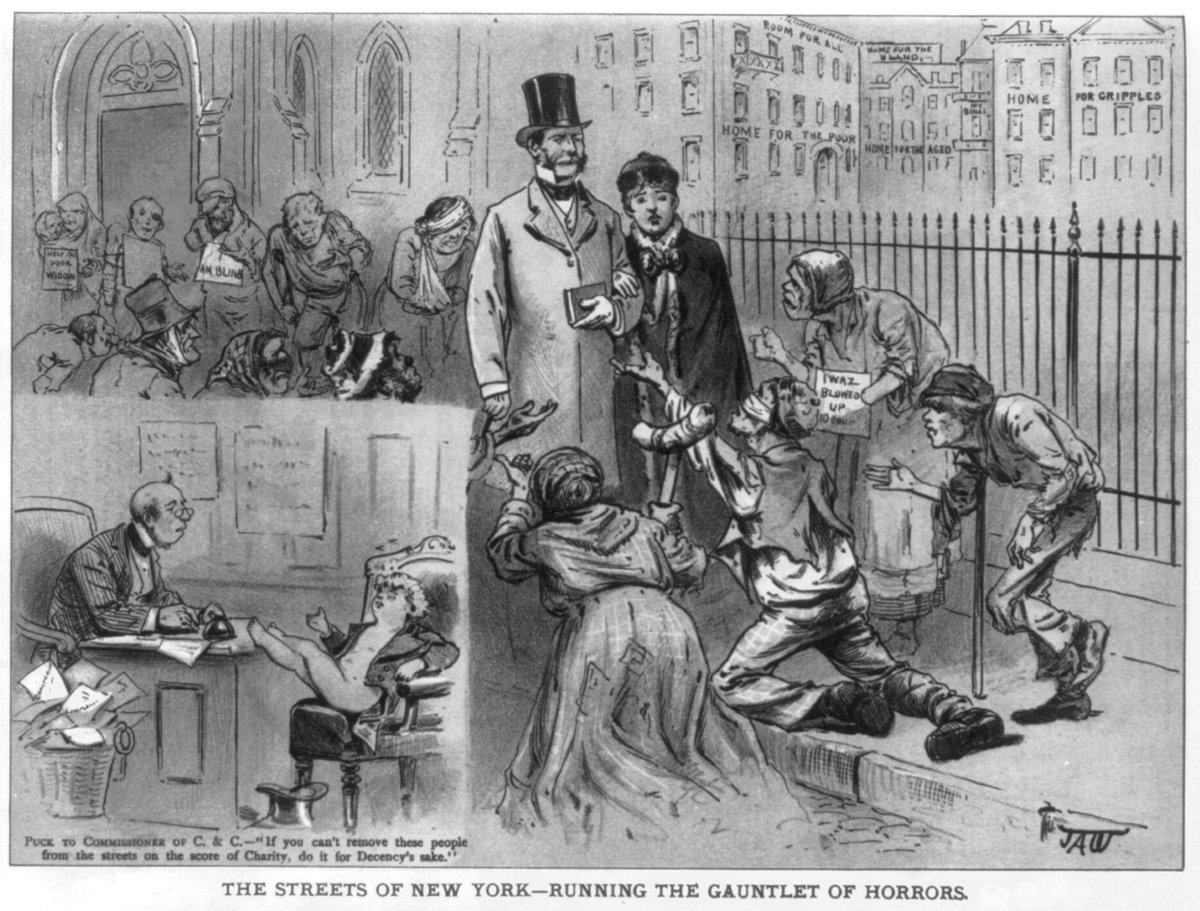
"From the late 1860s until the 1970s, several American cities had ugly laws making it illegal for persons with "unsightly or disgusting" disabilities to appear in public. Some of these laws were called unsightly beggar ordinances."
Ugly Laws, Wikipedia

Political cartoon stereotyping poor disabled in New York City © Library
of Congress


Today a hearing on discovery motions was scheduled to take place at  9am, in San Jose in the case of R. Flowers, Et Al v V. Gopal, Et Al.  The plaintiffs are continuing to demand a permanent injunction against the Gopal family's autistic son, despite the fact that the Gopal family no longer lives in the neighborhood and neither do the Flowers. The plaintiffs claimed that the presence of the Gopal family's child in their neighborhood dropped property values. Actually, the fact that the Flowers' were renters dropped the property value. The Gopal family owned their home. I am trying to grasp how saying a 9 year old child appearing in public can drop property values is not invoking the ancient "Ugly Laws", and how people can feel comfortable putting this on legal documents and presenting it in court in this day and age. 

The Autism Society views the potential for harm against families who have autistic loved ones as great if lawsuits of this ilk become a pattern. Sadly they never mention the harm that is being incurred by the child himself or those who share his neurology.

Some experts wonder how this case progressed at all. Quoting the San Jose Mercury News:

"Stephen Rosenbaum, a lecturer at the UC Berkeley Law School, who specializes in disability rights and is familiar with the lawsuit, said he is surprised the case has continued as long as it has."

""This is something that should never have gone to court, in my view," said Rosenbaum, who is also an associate professor at Golden Gate University School of Law. Instead, he said, it should have been resolved through an informal dispute resolution process or mediation; sources, however, say that route failed."

I do agree with professor Rosenbaum's professional opinion that an informal dispute process or mediation is the route through which this dispute between three former neighbors should have been resolved. I also believe autism advocate, parent, and attorney James Gallini is quite accurate in his observation of this case:

"This is a very dangerous lawsuit in California and, because of the legal definitions of 'nuisance' and 'public nuisance', dehumanizes our autistic citizens by defining them as something other than human to be controlled or removed and as chattel (an item of property other than real estate). The Judge in this case did enter a temporary injunction against this family and their child. In short, a restraining order to prevent "irreparable harm" to the community and property while the legal issues are being heard."

My fear is that the preponderance of recent court cases are by adjudication placing a de facto label of human chattel on people with invisible disability in general and autism in particular. One could almost define recent legal cases in disability rights case law in California, and I am thinking of cases like San Francisco v Sheehan, as echoing  structural ableism remaining from the infamous  "Ugly Laws," the first of which appeared in 1867 in, by sad coincidence, San Francisco, California. 

This is a typical example of ugly public comments left
under local news articles about R. Flowers v V. Gopal. As you can see
Ms. Schroeder takes the opportunity to vent her resentment
 of what she terms "3rd world immigrants" says "How about India footing the bill?"
and other hateful comments referring to keeping children on a leash
and  the idiotic idea that autistic children have,
and this is in all caps "NO DESIRE to play with other children.;
IT IS A FACT." She is a perfect example of the taint of ableism & ethnic biases
this case is bringing to the surface. 
By finding legal ways to strip neurodivergent people of their competence in court, our legal system erases them from their own trials, and this opens the door to a terrifying future of reverting intersected disabled members (please note the Gopal family is an ethnic minority) to the distancing and dehumanizing status of "human chattel"  at a time when a visible resurgence in  a polarized public's affection with eugenics and euthanasia is resulting in the passage of laws that threaten disabled people and their families outright. The rights of disabled people to community access and self determination guaranteed by the American's with Disabilities Act and the Olmstead decision can potentially be legally whittled away by these types of legal cases. All under the gateway guise of public nuisance litigation; all the while plaintiffs like the Flowers miseducate the public that somehow the threat is the disabled person rather than the bias at the intersection of ethnic hatred and ableism that drives the negative way intersected disabled people are treated in their own communities.

Proctors answering document in U.S.
v Amistad © National Archives
I am a Black woman, and therefore am painfully aware of what the status of "human chattel" means within American caselaw. The primary challenge to abolitionists during the attempt to defend the free African men and women captured in Sierra Leone and sold into slavery illegally, was the concept that in the United States, anyone who fit the definition of a Black slave was considered "human chattel". Despite the fact that all parties in the case of United States v. Libellants and Claimants of the Schooner Amistad agreed that these men and women were born free and were sold into slavery in violation of international laws, in our court system they were considered property. They had no voice in the series of trials on which their freedom hinged.  The case was escalated through the court system and was eventually won because "attorney Roger S. Baldwin successfully argued this case to the Supreme Court by the use of narrow, property-law based arguments rather than moralistic, broad-based attacks on slavery itself" knowing that any argument of their humanity would not sway the court to free them. In the end only 35 men survived the ordeal of years of unjust imprisonment in horrid conditions and bitter litigation to be freed and returned their homeland.This is what it means to be legally labelled "human chattel." So the successful injunction against this young child should disturb our entire community, as should the inherent violation of the child's right to privacy in the plaintiffs' demand for this child's entire school and medical records. It is a clear indication that the plaintiffs cannot otherwise meet their burden of proof and seek instead to use evidence directly related to this child's disability against him to make their case. Think about the implications of that. It implies that a person who has any invisible or psychiatric disability has no expectation of protection if someone wants to cash in on behavior related to said disability. Should treatments and supports delivered to assist a child in the classroom and at home be used against then in a case where there is insufficient event based evidence to collaborate the plaintiff's claims of public nuisance in court?

In our country, those who are different lose the legal right to any expectation of privacy for themselves and their children.

Poster for Tom Wiggins ©Word Stage
I should also discuss the case of Blind Tom Wiggins briefly because the fact that he was both born a slave and an autistic savant made the tragedy of his life that much more relevant to the case of Flowers v Gopal. The litigation for possession of Tom, whose earnings as a world renown pianist were estimated at the equivalent of $5 million dollars today, was bitter and lengthy and continued as long has he was earning money touring. Meanwhile Tom was locked up in a series of hotel rooms while a series of owners squandered his earnings. After the Emancipation Proclamation  and the end of the Civil War, Tom remained a slave. He was in fact called "The Last Slave in America" at one point. The ex wife of one of his owners finally won ownership of him by tricking his mother into suing her ex-husband's kin for her son's emancipation. Once freed, the woman convinced Tom's mother to sign guardianship of him to her. In order for anyone suing for ownership of him to keep complete control of Tom regardless of the Emancipation of all slaves, he had been declared insane and thereby legally within the category of "human chattel". Abuse of intersected autistic people through legal means is just that old and just that simple.

In fact one of the foundational issues with the way that autism as a disability is dealt with in our society is this attitude that autistic people are de facto chattel unless they continually prove their competence. This frightening attitude is at the heart of deadly results like the infamous case of Kade Hanegraaf, an autistic teen who at 14, was the victim of "debarking" surgery  because his parents saw him as "human chattel" and therefore consented to this monstrous procedure.  Please see Lydia Brown's moving essay on literal silencing for detailed information here.

I hope you can all see how critical the presumption of competence is to the entire autism community.  It continues to confound me that other parents fail to see how critical this is, and how damaging the presumption of the incompetence of our own offspring has been to our community.

In this entire litigation, we do not know:

1. Why Robert and Marci Flowers and their former neighbors insist on continuing this legal action when the Gopal family moved away from the neighborhood months ago, and the Flowers have since moved from it as well, and how this pursuit of monetary gain through legal action despite the fact that the Gopal family has done everything to accommodate the plaintiffs, including leaving their home of seven years, is not discrimination based on the child's disability;

2. What the autistic child in question's ability to communicate is, and whether he can communicate and therefore give testimony in his own defense;

3. Why there has been no mention of the child's rights under the Olmstead decision and the ABA to community access  with supports, and whether or not, once behavioral supports were put in place for this young man whenever he entered the local community, the continuance of this case actually violates of the child's right to community access.

4. Whether the court's injunction was made after the child left the community in question, which would make no sense and whether further permanent injunctions in light of the fact that both one of the plaintiff families and the defendant family no longer reside in that community, are violating their rights as well.

5. What has been done on the part of the defense team to insure the Gopal family is not being targeted  based on their ethnicity and insure no bias is present in the court proceedings against them? How much of what is going on here is simply a lack of understanding of cultural differences that have led to this escalation?

Most of what has driven this case, and what drives this type of lawsuit is the goal of monetary gain against defendants who appear wealthy. It seems past time for privileged autism families to take notice. This case is dangerous because it can give bad people the idea that they can trump up charges against autistic people who may be unable to respond or defend themselves and sue wealthy autism families for damages. It is also a dangerous byproduct of the way autism is presented by  organizations who insist on displaying autistic children and adults as helpless, raging, human chattel, thus stripping them of human rights, destroying their access to their communities and causing great harm to those who they claim to advocate for. Our community needs to urgently work to change how the public and the legal system view autistic children and adults. If we don't, our loved ones will pay the consequences.


Resources and References:
-------------------------------
R. Flowers, Et Al Vs V. Gopal, Et Al
http://tinyurl.com/njfoezw
http://www.sfautismsociety.org/blog/neighbor-lawsuit-seeks-to-declare-autistic-boy-a-public-nuisance
http://www.contracostatimes.com/breaking-news/ci_28832427/sunnyvale-neighbors-sue-banish-autistic-boys-family-claiming

San Francisco v Sheehan
http://thinkprogress.org/justice/2015/05/18/3659969/supreme-court-justices-wont-let-mentally-ill-woman-sue-police-shot/
http://www.scotusblog.com/case-files/cases/city-and-county-of-san-francisco-california-v-sheehan/

Harm from the "Human Chattel" attitude embedded in Structural Ableism
The Literal Silencing of Kade Hanegraaf
http://www.autistichoya.com/2013/09/literal-silencing.html
http://www.salon.com/2013/09/27/is_surgically_altering_an_autistic_boys_voice_cruel_or_kind/

Violation of Disabled Bodies for Caregiver convenience - The Case of Ashley X
http://content.time.com/time/nation/article/0,8599,1574851,00.html

Lifelong Violation of Human Rights: The Case of Autistic Savant Blind Tom Wiggins
http://www.blindtom.org/who_was_blind_tom.html

Kidnapped Africans as "Human Chattel" In American Caselaw:
https://www.archives.gov/education/lessons/amistad/proctors-answer.html
http://law2.umkc.edu/faculty/projects/ftrials/amistad/Ami_trialrep.html
http://law2.umkc.edu/faculty/projects/ftrials/amistad/AMI_BBAL.HTM

The Ugly Laws
https://en.wikipedia.org/wiki/Ugly_law
https://madeinamericathebook.wordpress.com/2011/01/19/ugly-or-needy/
http://www.loc.gov/pictures/item/2006681441/