|
Alicia Garza stands with the words Black Lives Matter
taped over her mouth to represent the erased voices
of female and female identifying black victims, in
solidarity with #SayHerName Protesting credit X-Spore. net |
In "
A Herstory of the #BlackLivesMatter Movement by Alicia Garza" on The Feminist Wire, Ms. Garza discusses herself, Patrice Cullors, and Opal Tometi uniting to create the ' 'Black Lives Matter' hashtag, building the infrastructure to transition it from social media to the streets, then organizing and executing the first #BlackLivesMatter ride. But what this essay is really about is something that all of us who are intersected members of any activist community have been subjected to. It is about theft. In this case, the theft of Black Queer Women’s work. It happened in two steps: appropriation and erasure.
Ms. Garza's description of how other groups, activists, and corporate entities appropriated their work and then erased the existence of these three powerful activists from the movement they established and took to the streets is painful to read. Quoting Ms. Garza:
"Suddenly we began to come across varied adaptations of our work–all lives matter, brown lives matter, migrant lives matter, women’s lives matter, and on and on. While imitation is said to be the
 |
Patrisse Cullors, Opal Tometi (center) and Alicia Garza (right),
black, queer, founders of #BlackLivesMatter
credit Madame Noire |
highest form of flattery, I was surprised when an organization called to ask if they could use “Black Lives Matter” in one of their campaigns. We agreed to it, with the caveat that a) as a team, we preferred that we not use the meme to celebrate the imprisonment of any individual and b) that it was important to us they acknowledged the genesis of #BlackLivesMatter. I was surprised when they did exactly the opposite and then justified their actions by saying they hadn’t used the “exact” slogan and, therefore, they deemed it okay to take our work, use it as their own, fail to credit where it came from, and then use it to applaud incarceration."
"I was surprised when a community institution wrote asking us to provide materials and action steps for an art show they were curating, entitled “Our Lives Matter.” When questioned about who was involved and why they felt the need to change the very specific call and demand around Black lives to “our lives,” I was told the artists decided it needed to be more inclusive of all people of color. I was even more surprised when, in the promotion of their event, one of the artists conducted an interview that completely erased the origins of their work–rooted in the labor and love of queer Black women."
I've seen this progression of appropriation and erasure happen repeatedly in the disability rights activism community as well. The sad thing is when people and organizations are called out on their behavior, they often silence or ignore demands they right their divisive and destructive actions.
 |
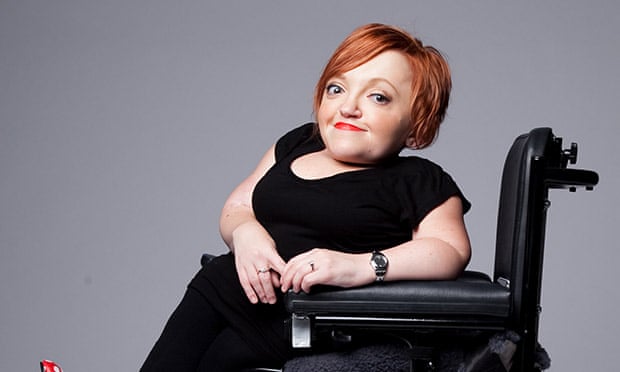
The late Stella Young: disability rights activist and comedian
Photograph: SmartArtists PR |
The newest example of the attempted posthumous appropriation of what a disability rights activist represented, thereby erasing her body of work as an activist by objectifying her was
the public bungle of TEDx Sydney after the death of the great activist and comedian Stella Young. Her TEDx talk "
I am not your inspiration porn, thank you very much" makes it clear that disabled people should not be objectified, used as scenery to inspire others or create awareness . Googling Stella Young results in numerous interviews and presentations that make it clear probing and embarrassing personal questions to disabled people are not acceptable but this clearly didn't get through to TEDx, who launched #StellasChallenge, a disability awareness campaign that made it clear when the late Ms. Young spoke, TEDx wasn't listening. The outrage from Stella's friends, peers, and fellow activists brought TEDx to its senses, but the organization, in trying to push this flawed awareness campaign, might have succeeded in erasing a great activist's life work when the intent was to honor her. At least TEDx listened to everyone in the end and are making an effort to correct their mistakes.
Autism advocacy is awash with this behavior. Here are two examples I am using because I feel that autism rights organizations have failed to do what the rest of the disability community did to save the good work of the late Stella Young. It is time to for us to put a stop to this.
Co-opting The Neurodiveristy Movement by Appropriation and Erasure
Let me tell you about an activist I've known since her student activist days at Georgetown, and then illustrate what I mean.
I asked Lydia Brown to self identify for me. My intent was to learn their preferred identifiers and to refer to them respectfully. So let me let them tell you who they are:
" I am queer, genderqueer, east asian transracial adoptee, and disabled, and I also have a Christian upbringing, class privilege, elite educational privilege, and citizenship status. Because it's important to acknowledge and name both my oppressed and privileged identities/experiences."
 |
Lydia Brown reading a section of Frederick Douglass' speech
What to the Slave is the Fourth of July at the annual
communal reading on Boston Common in solidarity
with #BlackLivesMatter #DisabilitySolidarity
Photo credit Pamela J. Coveney |
Lydia accomplished great things while still in high school and brought that drive to create transformative change to college. While continuing their studies and activism, they also began a blog,
Autistic Hoya. All of this hard work brought awards, accolades, and got them invitations to speak as a topic expert at university campuses and conferences throughout the country.
So in 2013, Lydia was invited to speak at William and Mary as part of the college's
Neurodiversity Initiative. The events that followed their presentation led to one of Lydia's most powerful and overlooked essays, which discusses the co-opting of the neurodiversity movement by the same people and organizations who, whether with malice aforethought or unwittingly, perpetuate structural ableism by marginalizing the movement and those activists and allies in it. The essay illustrates eloquently the type of appropriation and erasure rampant in autism advocacy by a stakeholder community that continues to denigrate, infantalize, and objectify autistic adults.
"
Co-Opting the Movement: Autism Speaks, John Elder Robison, and Complicity in Oppression"
is a groundbreaking essay that should be required reading for anyone trying to understand what is wrong with autism advocacy as it exists in general and what is wrong with Autism Speaks in particular. In Lydia's own words:
"An individual autistic person with close ties to organization that promotes an appalling vision of a marginalized group that is certainly not in alignment with even the most basic aspects of the neurodiversity movement has not only lent his voice to that organization but has been named as the public face and leader of a program supposedly committed to the empowerment of autistic people, and all this in the name of neurodiversity. This is incomprehensible. “
"A few weeks ago, in conversation with a stranger, I was asked if it wouldn't be possible to compromise by collaborating with Autism Speaks on issues where our work might overlap. This is not possible. It will never be possible for me to work with Autism Speaks for as long as their philosophies, mission, and rhetoric remain the same as they are now. Our most basic goals are fundamentally and radically different. For you to ask me to cooperate with my oppressor is deeply insulting. I refuse to submit to complacency with the dominant narrative of autism as advanced by Autism Speaks, and I refuse to make myself complicit in my own oppression.”
"And even if Autism Speaks has absolutely no direct involvement whatsoever with Mr. Robison's activities at William and Mary, he has already been positioned as a leader in the neurodiversity movement, and this rhetorical positioning already serves to co-opt the movement with Mr. Robison's work, which is decidedly outside the neurodiversity movement and has been repeatedly criticized from within it.”
The college's use of the word neurodiversity was a ruse to redefine it and as such assist in steering autism stakeholders away from interest in the civil rights of their autistic loved ones while misleading neurodivergent students entering the campus. Appropriate. Erase.
I don't know what Mr. Robison did in his one year tenure as Neurodiversity Scholar In Residence . But what is critically important in this episode is to understand what role privilege plays in the appropriation of the groundwork others have laid and what their erasure from the landscape of their own activism means. Witness it and know it for what it is. In this particular case, Mr. Robison was the privileged person who benefitted from the erasure of a neurodiversity movement that he criticized and dismissed in the past, erasing the importance of all the activists who aren't public figures or white, cisgender, wealthy, published authors, whose passion, intelligence, professionalism and persistence brought civil rights in the autism community to where it is today.
Appropriation and Erasure by Autism Speaks
Autism Speaks continues to promote a corporate culture which incorporates silencing of autistic activists by structural appropriation and erasure. When their own rhetoric, which was extremely offensive, began to be offensive to a growing number of parents, their response was to appropriate the language of disability rights advocacy and twist it to erase its impact and effectiveness. When autistic activists shouted "acceptance not awareness" Autism Speaks derailed the term acceptance by inserting a condition for its members. "We accept our autistic children, but we don't accept autism." You cannot separate the divergent brain of a person from that individual. Nor was this what was meant by the term "acceptance." But the appropriation of this term by medical model organizations has erased both its intent and its effectiveness and by doing so, is threatening erasure of the life's work of the autistic activists and allies who fought for acceptance against Autism Speaks and its predecessors for more years that Autism Speaks has been in existence.
 |
Autistic Activist Kassiane Sibley is in a four year fight
against the appropriation of her work by Autism Speaks.
Photo Credit Jon Ems |
Not satisfied with that, Autism Speaks wanted to take the concept of self advocacy and skew it so that self advocacy became a term they could control by acquiring autistics to fit their redefined version of self advocacy. That would be self advocacy that agreed that autism was what was wrong with them and that autism somehow made them less that others . This was because for ten years, autistic self advocates had been the most vocal opponents of their ableist fundraising campaigns and offensive rhetoric. So in 2011, Autism Speaks published an online toolkit that featured a 10 page section on self advocacy. As Liz Ditz explained to readers in her
essay, "When National Charities Offend Those They Are Supposed To Serve", Autism Speaks appropriated a quote from autistic author, educator, and activist
Kassiane Sibley's 2004 essay
"Help Me Help Myself: Teaching and Learning Self-Advocacy", which was published as a chapter in
Ask and Tell: Self-Advocacy and Disclosure for People on the Autism Spectrum, published by the
Autism Asperger Publishing Company (AAPC). Kassiane discovered the theft in February of 2011 and has fought a four year battle to have the quote completely removed from the online toolkit. Autism Speaks appropriated her intellectual property without proper consent and flatly lied about this. Unlike TEDX Sidney, they did not acknowledge the wrong they did for years. Not only has Autism Speaks never issued a public apology for appropriating Ms. Sibley's work, they also tried to repost a version of their toolkit with Kassiane's intellectual property white texted back in it. So the document and the internet will have to be continually monitored to insure they don't try using it again in any form.
In seeking answers as to why Autism Speaks, with huge funding and resources at its disposal, would feel the need to besmirch the name of a known anti Autism Speaks activist and veteran of the neurodiversity movement, appropriate her work without permission, and refuse to apologize and take it down, I can only quote
Alyssa at Yes, that too;
"And can we maybe think about the fact that this is an organization run by mostly white middle to upper class parents of autistic kids doing this to a poor, multiply disabled, Autistic woman of color? Did they maybe purposefully choose someone they'd expect to be unable to fight much?"
I have had people contact me requesting I submit articles on autism for publication. When I was naive enough to believe my intellectual property was secure, I would submit work and then reel in shock while editors proceeded to re-write and return a final draft in such a state that I was unable to identify what I wrote in the first place. I've ended up retracting such articles despite knowing some would have gained my writing a national audience. A woman who worked for another organization later admitted that she was told to contact me under the pretext of interviewing me to try and force an admission that I was either autistic or otherwise neurodivergent, in order to discredit my body of work in disability rights. I am not certain which was worse, the idea that any public entity would assume something written by an autistic topic expert is of less import that something written by someone who gave birth to an autistic person, or that somehow "outing" me as autistic would discredit me. This is the kind of ableism autistic people fight to overcome. Things I've written have been used as templates for other articles by parents with "better optics" and white demographics without citing me as a source. Someone posted publicly that my resources on anything wouldn't help her because of my demographics; which she later clarified to say that because I was a Black autism parent, any information I might have was beneath her as she was white.
 |
Faded black and white image of author on a white field with the hashtag
Stop Erasing Us ©Kerima Cevik |
Over time, I had accepted that this would be repeatedly done to me and tried to seek ways to work around it. My work around plans have thus far been successful. I find however that I have no tolerance for it being done to other activists and allies, particularly those who are the past, current, and future voices for both their marginalized populations and the greater autism civil rights community. We don't have such an abundance of activists that we can afford to allow their erasure and the appropriation of their body of work. We should
not be allowing this to happen. When we see it we should speak up about the wrongness of it and support any action needed to rectify it. Too many have not and this enables the abuse to continue.
Allies, colleagues, and others who want the true founders of #BlackLivesMatter to be acknowledged have gone back to the roots of the movement to fight against the appropriation and erasure of these tremendous Black Queer Women. They have taken to social media and are countering with truth, art, spoken word, everything they can each time an appropriative event happens. I believe we need to look to the same place that three mighty women grieving over Trayvon Martin and having no idea the avalanche of deaths to follow went to have their voices heard and we must also act to begin to end the erasure of our activist and ally work. Maybe we should also begin with a hashtag.
#StopErasingUs
Further Reading References and Resources:
A Herstory of the #BlackLivesMatter Movement by Alicia Garza
http://www.thefeministwire.com/2014/10/blacklivesmatter-2/
#SayHerName
http://www.democracynow.org/2015/5/20/say_her_name_families_seek_justice
The Posthumous Objectification of Stella Young
Stella's talk against inspiration pornography:
https://youtu.be/8K9Gg164Bsw
Disability Community's response to #StellasChallenge:
https://storify.com/SFdirewolf/no-more-awareness-stellaschallenge
On the take aways from TEDX Sydney's bungle:
http://theconversation.com/doing-justice-to-disability-the-upside-of-tedxs-stella-bungle-42324
T
he Corrupting of the term Neurodiversity
http://www.wm.edu/news/stories/2013/neurodiversity-advocate-robison-to-teach,-consult-at-wm123.php
Autistic Hoya On Co-opting the Movement
http://www.autistichoya.com/2013/11/coopting-the-movement.html
http://www.autistichoya.com/2013/04/erasure-and-silencing-by-omicron-pi.html
Kassiane Sibley at Neurodivergent K on Appropriation and Erasure by Autism Speaks
http://timetolisten.blogspot.com/2011/02/autism-speaks-shut-up-and-listen.html
The Theft Of An Intersected Activist's Work By Autism Speaks
http://yesthattoo.blogspot.com/2014/01/autism-speaks-are-work-stealing-white.html
http://lizditz.typepad.com/i_speak_of_dreams/2012/01/when-national-organizations-offend-those-they-are-supposed-to-serve.html